
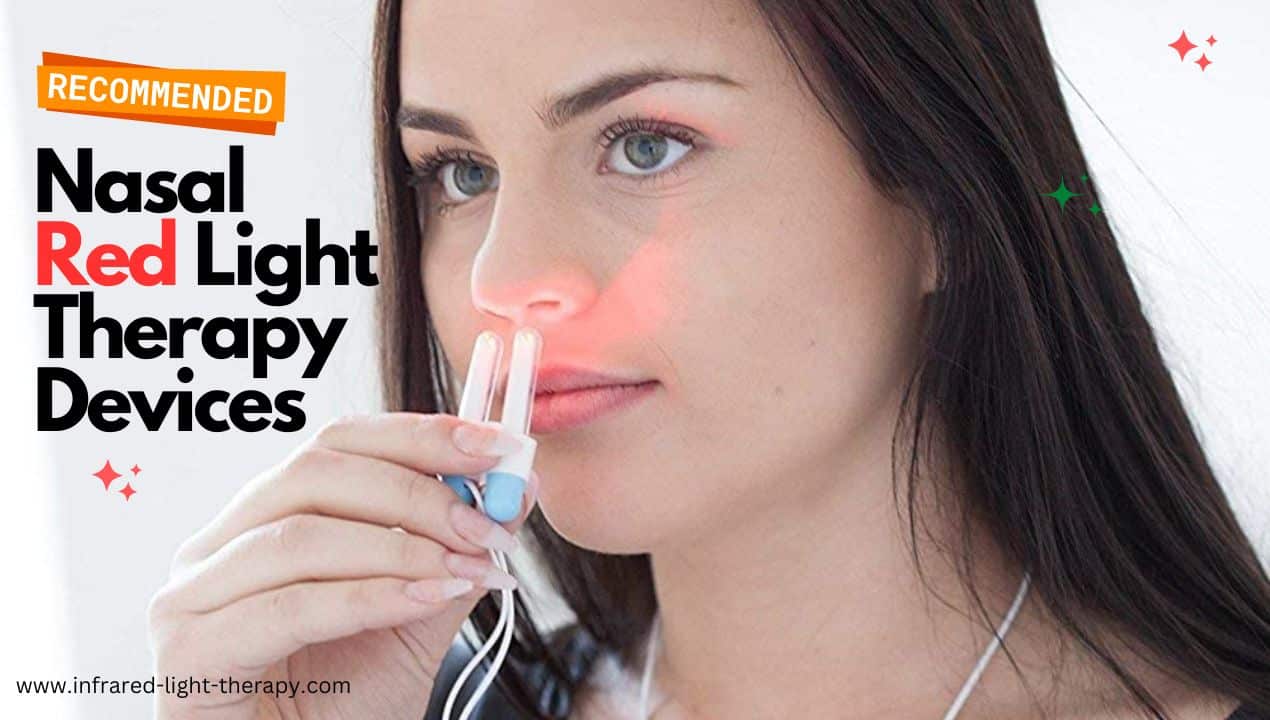
I’ve struggled with allergies for as long as I can remember.
Spring meant constant sneezing, a blocked nose, and itchy eyes.
The cold season was even worse. What started as a simple cold often turned into a sinus infection that lasted for weeks.
Allergy pills made me sleepy. Nasal sprays helped only for a short time.
That’s when I discovered intranasal red light therapy.
In this post, I’m sharing my personal journey with intranasal red light therapy, reviewing the devices I’ve tried, and explaining the science behind why it works.
👉 In a Hurry? See my comparison table or jump to the intranasal allergy reliever reviews.
- If you want the cheapest option that still works well – the RubyLux BioNase is the easiest way to try nasal light therapy.
- If you want the most advanced device with multiple wavelengths – the MitoBOOST Intranasal Device is the most powerful option here.
- If you want one device for sinuses, skin, and other uses – the Aswaysun therapy device is the most versatile choice.
- If you want something small and very portable – the No More Colds device is the simplest and lightest option.
This post may contain affiliate links at no extra cost to you.
Overview
How Does Nasal Red Light Therapy Work?
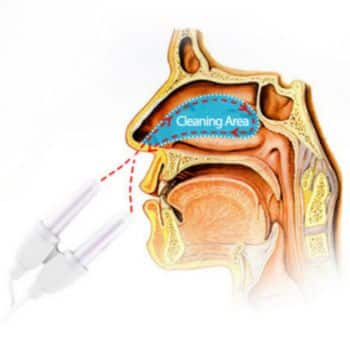
You basically clip a small red light therapy diode – usually between 630nm and 810nm – to your nose, which shines the light into your nasal cavity.
These little LED probes stimulate the blood vessels in there, which, in turn, do some pretty cool stuff:
- Improves circulation in nasal tissues
- May reduce swelling inside the nose
- Can help improve airflow through the nasal passages
- May support immune activity in the nasal lining
Which Wavelength is Scientifically Proven for Intranasal Devices?
Studies show that the most commonly used and effective wavelengths for intranasal photobiomodulation therapy (i-PBMT) are in the red (600–680 nm) and near-infrared (NIR, 800–850 nm) ranges.
These wavelengths are chosen because of their ability to penetrate biological tissues and interact with cellular components, particularly mitochondrial enzymes involved in energy metabolism.
- Red Light (600–680 nm) – Devices that use 660 nm red light have been shown to boost the activity of immune cells and help widen blood vessels by increasing nitric oxide (NO) in the body. All the devices in this list have this wavelength range.
Shining red light inside the nose is also believed to have positive effects throughout the body by affecting the blood cells in the nasal lining.
- Near-Infrared Light (800–850 nm, especially 810 nm) – Near-infrared wavelengths such as 810 nm are sometimes used because they can penetrate tissue slightly deeper than visible red light. 👉 Note: the Aswaysun device is the only one on this list with a near-infrared wavelength (850 nm)
- Blue light (450 nm) – 450 nm – blue light is mainly used to help kill or reduce harmful bacteria in the nasal passages, which can lower the risk of infections or help with sinus health. It can prevent bacterial overgrowth in the nose, making it useful for people who get frequent sinus infections. 👉 Note: The Mito Intranasal device is the only one with this wavelength.
How Many Times a Week and For How Long? (According to Science)
Clinical studies on intranasal red light therapy (RLRPT) have tested various treatment protocols, including different wavelengths, power outputs, session durations, and frequencies.
But there isn’t one “perfect” treatment plan that works for everyone.
Always follow the manufacturer’s recommended treatment time for your specific device.
Most clinical studies use sessions of about 3–20 minutes, depending on the device.
The 5 Best Nasal Red Light Therapy Devices
After way too much research and a whole lot of personal testing (my family definitely thinks I’m a weirdo now), I’ve narrowed it down to what I think are the best intranasal light therapy devices in 2026.
1. RubyLux BioNase LED Nasal Therapy Device – Best Budget
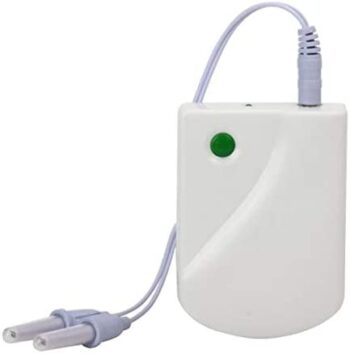
My Personal Take: If you’re on a budget or just want to dip your toes into the world of intranasal red light therapy, the Bionase is a fantastic starting point.
- Treatment time – 5 minutes twice a day
- Wavelength – 660 nm
✅ Pros – affordable, effective for clearing sinus congestion with regular use, short treatment time – 5 minutes is all you need, comes with a free replacement set of LEDs
❌ Cons -The probe spacing might be a bit wide for some noses, and some users have mentioned the auto shut-off not working. (I just disconnected the probes, and it turns off. No biggie)
Okay, let’s be real. I love a good bargain, and the Bionase is it.
For under $30, you get this super simple device with two nasal probes that emit red light.
Plus, it even comes with extra LED lights, which is a nice bonus (though I haven’t needed to use them yet!).
Using it is ridiculously easy. You just pop in a 9V battery (not included), turn it on, and gently insert the probes into your nostrils.
Then, you just chill for 5 minutes. There’s an auto shut-off after 15 minutes, but I find that 5 minutes, twice a day, is perfect for me.
Available on Amazon ($29)
2. MitoBOOST Intranasal Device – Trusted Brand
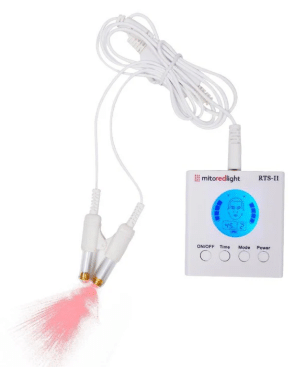
My Personal Take: If you’re looking for a high-quality red light nose therapy device with advanced features and are willing to spend a bit more, the MitoBOOST is an excellent choice.
- Treatment time – 10-30 minutes (adjustable) x 4 times a week
- Wavelengths – blue (450 nm) + Red (650 nm)
✅ Pros – Dual-wavelength technology for targeted treatment, cordless and portable, easy to use (once you get the hang of it), excellent customer service
❌ Cons – It’s pricey, and the user manual could be better (but it’s not rocket science).
Yes, it’s an investment. But after using it, I can honestly say that the Mito Boost is worth it if you’re serious about getting your sinuses under control.
What I love about this device is its dual-wavelength technology.
It uses both blue light (450 nm) to zap bacteria and red light (650 nm) to reduce inflammation and boost immunity.
You can even use different wavelengths in each nostril! I usually use the blue light when I feel a cold coming on and the red light for general allergy relief.
Plus, the Mitoboost is cordless, portable, and lightweight, so I can use it while I’m working, reading, or even binge-watching my favorite shows.
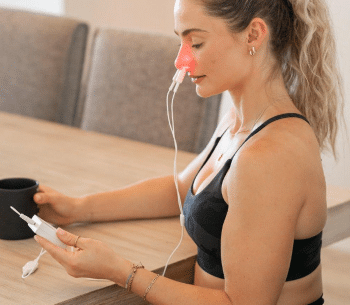
It took a couple of weeks of consistent use to really notice a difference, but now I’m hooked.
My sinuses feel clearer, I’m sleeping better, and I haven’t had a full-blown sinus infection since I started using it.
Available at MitoRedLight ($299)
3. Bionette Nasal Light Therapy – Clinically Tested
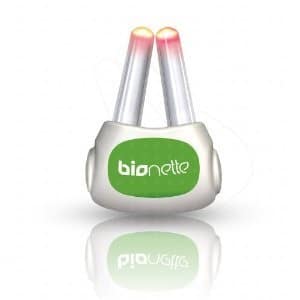
My Personal Take: If you’re sensitive or prefer a gentler approach, the Bionette is worth considering. It’s also a good option if you’re already taking other medications, as it’s safe to use alongside them.
VIEW ON AMAZON $99
- Treatment time: 5 minutes (with auto shut-off), 2-3 times a day
- Wavelength: 630 nm, output: 4-8 mW
✅ Pros – Safe to use with other treatments/medications, doesn’t heat up your nostrils, long battery life (up to 80 treatments!), safe for children
❌ Cons – Batteries are not included
The Bionette is small and simple, but don’t let its size fool you.
This little device is clinically tested and has adjustable nasal probes for a comfortable fit.
What’s cool about the Bionette is that it’s gentle yet effective.
Some users have even found relief from sinus-related headaches after years of struggling, and I know from experience how horrible those are!
Using it is a breeze: just squeeze the buttons on the sides, insert the probes, and relax. It’s so gentle, I barely even feel it.
Available on Amazon
4. Aswaysun Red Light Therapy Device – Multipurpose
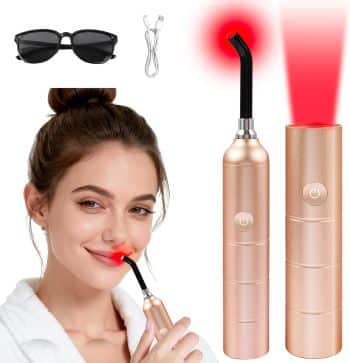
My Personal Take: If you’re looking for a versatile device that can be used for multiple purposes, the Aswaysun is a great option.
VIEW ON AMAZON $50
- Wavelengths – 660 nm / 810 nm / 850 nm / 940 nm
- Treatment modes – 2 modes
- Treatment time- 3 minutes up to 4 times a day
✅ Pros – small and portable, designed for mouth and nose use, can also be used on small body areas, combines red and near-infrared wavelengths, useful for cold sores, canker sores, lips, face, joints, and muscles
❌ Cons – You can only treat one nostril at a time
The Aswaysun uses red light and near-infrared light, with 2 different modes to choose from.
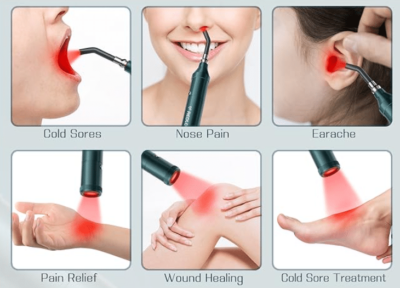
So, you can use it for nasal congestion, skin anti-aging, ear infections, joint pain, and more.
It is small, portable, and easier to use on tiny areas than a larger red light therapy panel.
The only downside is that you can only use it in one nostril at a time, so it can take a little longer if you want to treat both.
Available on Amazon ($50)
5. No More Colds Red Light Therapy
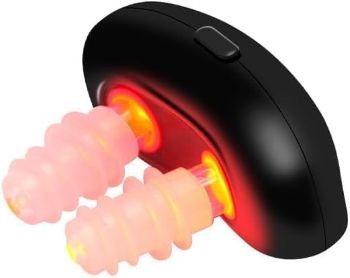
VIEW ON AMAZON $19
- Treatment time – 5–7 minutes, 1–2 times a day
- Wavelength – 660 nm (Red light only)
✅ Pros – Super lightweight and USB rechargeable (no batteries needed), soft, flexible nasal tips that don’t feel intrusive, has an automatic timer
❌ Cons – Doesn’t include near-infrared or blue light like some other devices
The nasal probes are soft and flexible, which makes them comfortable to use.
I also love that the No More Colds Red Light Therapy is USB rechargeable – no scrambling for a 9V battery or keeping track of AAAs.
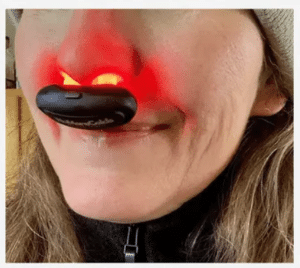
Through my research, I’ve found that some users have had significant relief from ongoing nasal irritation, while others were not so pleased, stating that the device did not meet their expectations in preventing cold symptoms.
To conclude, this targeted device is comfortable, easy to use, highly portable, and reasonably priced. It’s worth a try.
Available on Amazon (also called Respirelief) for $19
Benefits of Intranasal Light Therapy
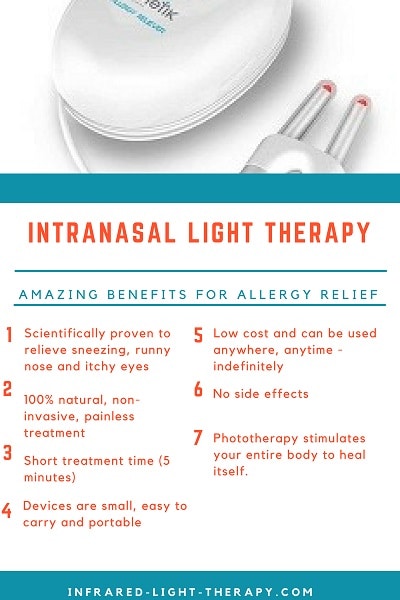
Okay, so I know it sounds a little weird, but intranasal red LED light therapy (also known as Rhino Phototherapy) is actually a pretty awesome way to get relief from allergies, hay fever, sinusitis, and even the common cold.
- Easier breathing through the nose
- Less nasal congestion
- Fewer allergy flare-ups
- Reduced sinus pressure
Does Nasal Light Therapy Work for Allergies and Sinus Infections?
Some clinical studies on allergic rhinitis have found symptom improvement with intranasal red light therapy.
Red light therapy suppresses cells that release histamine, which is responsible for causing allergy symptoms and may help to reduce inflammation and swelling in the nasal passages, which can help to improve nasal airflow and reduce congestion.
For example, this clinical trial (double-blind randomized) has reported significant improvement in symptoms by 72% of Allergic Rhinitis patients, and objective improvement was endoscopically seen in 70% of them, as compared with 24% and 3%, respectively, in the placebo group.
Intranasal Light Therapy Side Effects
Photobiomodulation is proven to be without any major side effects and has been supported by a large body of scientific evidence for over 30 years.
Look, I’m not going to lie, I was a little worried about side effects when I first started using these devices. But the good news is that photobiomodulation is generally considered to be very safe.
The FDA even categorizes low-level light therapy as a “non-significant risk” product.
However, like with anything else, it’s important to use these devices as directed and not overdo it.
- Do not shine light directly into the eyes
- Stop using the device if irritation occurs
Conclusion
If you struggle with constant nasal congestion, allergies, or sinus irritation, intranasal red light therapy may be worth trying.
These small devices take only a few minutes per day and can provide relief without relying entirely on medication.
If you’re curious, start with one of the devices above and see how your body responds.
Don’t forget, you can also use an infrared heat lamp for allergy relief!
To your health and happiness,
Meital
Studies
Narrow-Band Red Light Phototherapy in Perennial Allergic Rhinitis and Nasal Polyposis, Neuman, Ittai et al. Annals of Allergy, Asthma & Immunology, Volume 78, Issue 4, 399 – 406
I have severe swelling on the bridge of my nose..from my sinuses. I tried everything to get the swelling down, and nothing seems to work. Do you think red light theropy would help get the swelling down?
Yes, I think you could benefit from an intranasal red light therapy device – see the post to find out more.
What are the effects on the heart? I have HyperPOTS where I have increased blood pressure and BPM, the vasodilation scares me as that’s already an issue for me, looking for better blood flow with some vasoconstriction, but any vasodilation will make it worse. The ideal scenario is lower blood pressure with vasoconstriction. Also have Arrythmia on occasion, any research on these products with reducing arrhythmia?
According to what I’ve found, red light therapy (through LEDs) does not have any negative effects on the heart. And, normally, illumination does not have an effect on the heart’s electrical activity. In fact, some scientists are now convinced that light pulses can be used to replace electric shocks for normalizing heartbeat.
To be on the safe side, consult with your doctor before you start any treatment with light therapy.
Can it increase polyps? Reason I am asking… since one of the reasons light therapy works is stimulations of mitochondria and feeding cells. I read an article about the continued debate regarding cancer about whether it improves or makes it worse due to simulation of that cell feeding process.
I was wondering if then polyps could be made worse due to similar.
That’s a great question. From my knowledge about red and infrared light therapy, these wavelengths, which you are naturally exposed to when you go out to the sun, do feed the cell as you said, and thus make it healthier. Any batch of cells that are not healthy and not supposed to be there (such as tumors or polyps) – become healthier and thus stops growing abnormally or growing at all. That’s why when you expose a tumor to heat (infrared light) – the tumor is damaged but the surrounding, healthy cells are not affected. I hope this helps.
Do you think these devices work for non allergic rhinitis?
Yes, they can work. They do not target the allergy triggers but manage the symptoms of rhinitis – naturally and with no medication. It’s worth a try…
Is it safe to use this device if you get nosebleeds?
I can’t find a science-backed answer for you, unfortunately,but I don’t see why not.
I was looking for the best lamp to buy and what wattage worked best, so was disappointed with your info😞
You simply came to the wrong page Gilian…:) here’s my post about lamps: https://www.infrared-light-therapy.com/infrared-heat-lamp-therapy/
I hope it helps.
Hi – I suffer from an iatrogenic condition called Empty Nose Syndrome. In short, I had a turbinate reduction surgery with approximately 20% excised leaving me with one of many side effects, including rhinitis sicca, otherwise known as a dry mucosa. I’ve been investigating these devices for a few months now and ran across this article. If LLLT (redlight therapy) does what it says for mucosal tissues, such as increasing blood flow, enhancing blood oxygen saturation, repairing blood capillaries, improved nasal anti-virus/germs ability, and strengthening detoxification ability of the nasal mucosa, I would think that these improvements should offer a stable environment for improving moisture to the epithelial layer of the nasal mucosa as found on the turbinates. I welcome your thoughts – thank you.
I think you are absolutely right David, I would definitely try it!
Omg Same thing happened to me the stupid doctor did that to me and my nose is always dry now
I bought the hailcare and its really helped me. Combined with saline nasal spray every evening, I have stopped my telfast pills and avymist spray :-) Thank you to this page for sharing this info.
I’m thrilled to hear about your results. Thanks for sharing with us! 😍
I am interested in photobiomudulation for whole body healing. Does the products you sell or tell us about do this? Could one use different color led light diodes for different therapy, like perhaps target different places in the body that may need to be activated if they are not working the way they should? Are these different colored led light diodes available? Could you tell me of where I could read more research? Thanks, Angel33
Yes, different colors treat different conditions and you can use them on various body parts. Different colored LEDs do exist, but mostly not in one device – except for facial masks and one more type of device. If you’ll tell me exactly what you want to treat I can help you find the right device for you.
I have nasal congestion that I cant get rid of for about 7 years.
I am going to buy one of these.
Hope it works.
I think that’s a good idea. I’d love it if you come back to share your results with us 😍
Hi, what’s your feedback about Bionette ? Thanks for sharing.
best regards
Didier