

Infrared waves are a type of electromagnetic radiation with wavelengths that are longer than those of visible light, positioned on the electromagnetic spectrum between red light and microwaves.
Infrared radiation is invisible light, and it makes up a large part of the sunlight that reaches Earth.
It has countless applications, most of which you haven’t heard about, and some of them may blow your socks off.
While you probably heard about infrared saunas, infrared cameras, and infrared heating pads, you may be surprised to learn the countless IR rays applications in sports, medicine, surveillance, communication, missile guidance, weather forecasting, and even clothing.
In this post, you’ll find more than 30 fascinating facts about infrared rays, and how you too can use infrared therapy for your health and well being.
Ready?
Here we go.
This post may contain affiliate links at no extra cost to you.
What is Infrared Radiation?
Infrared radiation was first identified in 1800 by William Herschel, who discovered it while conducting an experiment using a prism and thermometers.
This may sound weird to you, but most of the light around you is invisible to the human eye.
Light is actually a form of energy that travels in waves, and we can place these waves on the electromagnetic spectrum.
Infrared radiation, or simply infrared or IR, is electromagnetic radiation with longer wavelengths than those of visible light and is therefore invisible.
Infrared radiation starts just beyond visible red (around 700–780 nm) and extends up to about 1 millimeter.
Infrared light has a range of wavelengths, just like visible light has wavelengths that range from red light to violet.
The heat (thermal energy) we feel from sunlight, a radiator or fire is infrared,
Infrared wavelengths range from less than a micrometer to about 1 millimeter, depending on the type of infrared.
Near-infrared is the part of infrared closest to visible light. Whether it feels warm depends on how powerful the source is, not just the wavelength.
(You’ll find it in your remote controls at home).
And now:
37 Amazing Facts about Infrared Radiation
1. Almost half of the energy arriving at the Earth from the sun comes as infrared light.
2. Anything which has a temperature puts out heat or infrared light.
3. Infra-Red waves are also given off by stars, galaxies, lamps, flames, and anything else that’s warm – including you.

Source: NASA
4. One of the advantages of IR observation is that it can detect objects that are too cool to emit visible light. This has led to the discovery of previously unknown objects such as comets, asteroids, and wispy interstellar dust clouds.
5. Everything has some heat and puts out infrared light. Even things that we think of as being very cold, like an ice cube – put out some heat.
6. Infrared cameras can often see through darkness and light smoke, light fog, or light rain.
7. In firefighting, infrared cameras are being used to locate people or animals in heavy spots and to detect hot spots in forest fires.
8. Humans, at normal body temperature, radiate most strongly in the infrared at a wavelength of about 10 microns. (A micron is a term commonly used in astronomy for a micrometer or one-millionth of a meter.)
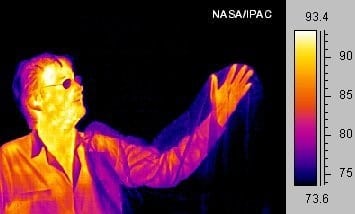
Source: NASA
9. Many traditional healing practices use warmth from the hands as a comfort technique. That warmth includes infrared heat.
10. The human skin can “see” infrared light (it is reacting to the infrared photons), not just the heated air.
Your skin can sense radiant heat, including infrared from the sun, even with your eyes closed.
On a sunny day, step outside, close your eyes, and you will discover that it’s very easy to find where the sun is in the sky without seeing any visible light at all, by using the palm of your hand as your “eye”.
11. In the winter, we feel comfortable with a sweater on when the room air temperature is 70F. In the summer, we feel more comfortable wearing a t-shirt in the same room air temperature of 70F.
The explanation is that even though the air temperature is the same, the walls and ceiling radiate FIR waves from the outside sunshine during the summer, which thereby causes our bodies to be warmer.
12. When you sleep next to someone, you exchange body heat, including infrared radiation. When you sleep alone, you still exchange heat with your bedding and the room.
 When people sit together and talk, they are sending out and receiving vibrations of FIR from each other. Cuddling your pet will also share FIR heat between you.
13. Humans may not be able to see infrared light, but snakes in the pit viper family, like rattlesnakes, have sensory “pits”, which are used to image infrared light
This allows the snake to detect warm-blooded animals, even in dark burrows. Snakes with 2 sensory pits are even thought to have some depth perception in the infrared.
14. Some fish species can detect near-infrared cues and use them for finding prey under certain conditions.
15. Infrared (IR) radiation is just as important to the Earth’s weather and climate as sunlight is. This is because, for all of the sunlight that the Earth absorbs, an equal amount of IR radiation must travel from the Earth back to outer space.
Otherwise, there would be global warming or global cooling.
16. The reason why the air cools so quickly on a clear, dry evening is that the lack of humidity and clouds allows large amounts of IR radiation to escape rapidly to outer space as it is emitted upward by the ground and other surfaces.
17. Satellites like GOES 6 and Landsat 7 look at the Earth. Special sensors, like those aboard the Landsat 7 satellite, record data about the amount of infrared light reflected or emitted from the Earth’s surface.
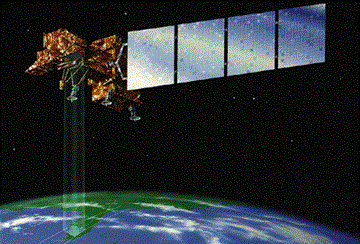
Source: NASA
Other satellites, like the Infrared Astronomy Satellite (IRAS) look up into space and measure the infrared light coming from things like large clouds of dust and gas, stars, and galaxies!
18. Some night-vision devices amplify available light (including near-infrared). Thermal cameras are different: they form images from heat, which is infrared radiation emitted by objects.
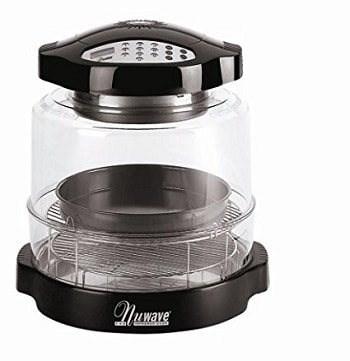
19. Infrared ovens were the first ovens.
In earlier days, infrared ovens were the most widely used electronic gadgets to heat food. They were made of an infrared producing burner that excited molecules and increased their temperature.
The hot air, however, dried the food up and these ovens were thus replaced by the present microwave ovens.
20. Infrared tracking, also known as infrared homing, refers to a passive missile guidance system that uses the emission from a target of electromagnetic radiation in the infrared part of the spectrum to track it
21. Weather satellites equipped with scanning radiometers produce thermal or infrared images, which can then enable a trained analyst to determine cloud heights and types, to calculate land and surface water temperatures, and to locate ocean surface features.
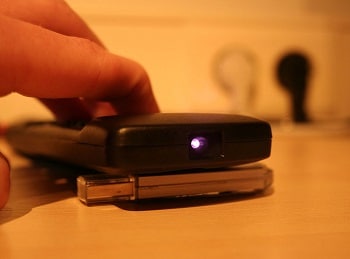
22. Infrared is the most common way for remote controls to command appliances
23. The Japanese have extensively researched Far Infrared Technology for use in the fields of healing, preservation, cooking, drying, and heating. Over 150 significant patents were granted between 1977 and 1987.
Here are a few popular infrared products available in Japan today (click the links to find them in the U.S.A)
- FIR sleeping pads and heaters – instant warmth even though air temperature remains cool (Infrared sauna too!)
- FIR plastic plate to keep fish and vegetables fresher and longer in your refrigerator
- FIR ceramic paper and ceramics.
- FIR fabrics – socks, infrared gloves, jackets, car seats (FIR fabric keeps the body warm in a cold environment whilst providing passive FIR health benefits)
- FIR hair dryer – cooler and faster, reduces damaged hair, now popular worldwide.

24. Infrared reflectography (as called by art conservators), can be applied to paintings to reveal underlying layers in a completely non-destructive manner, and specifically the under-drawing or outline drawn by the artist as a guide.
This is very useful information in deciding whether a painting is a prime version by the original artist or a copy, and whether it has been altered by over-enthusiastic restoration work
25. Tourmaline powders and some ceramics are marketed as ‘far-infrared emitting’ because they can increase infrared emissivity when warmed. This is why they show up in some heating pads, wraps, and fabrics.
Infrared Rays: Incredible Health Uses

Like any health treatment, infrared therapy has both potential benefits and limitations. You can read the full breakdown in this guide to infrared therapy benefits and risks.
Since ancient times, people have known that exposure to sunshine can maintain and boost health.
However:
These days, sunbathing is limited since sunlight contains potentially harmful UV rays, which can burn the skin.
(Plus, with IR rays technology, you can control temperature, and you are not limited to sunny days).
The pain-relieving and anti-aging benefits of IR therapy have been known for over 40 years – but here are some little-known facts about IR radiation health benefits and uses, worldwide:
1. In Japan, there is an infrared society, composed of medical doctors and physical therapists, dedicated to further Far Infrared heat research.
Their findings support the outstanding health benefits of Far Infrared thermal therapy as a natural method of healing.
2. Far Infrared strengthens the cardiovascular system by causing heart rate and cardiac output to increase, and diastolic blood pressure to decrease.
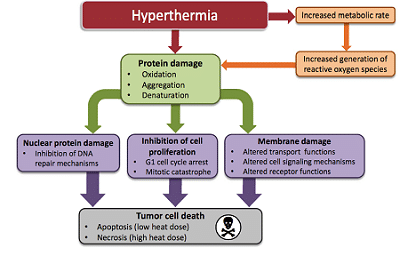
3. Medical hyperthermia is a controlled cancer treatment where tissue is heated (often around 40-45°C) to help damage cancer cells or make them more sensitive to radiation or chemo. This is done with medical equipment under supervision. It is not the same thing as using an infrared sauna at home.
However:
It is now acknowledged and attested to by the American Cancer Society and the National Cancer Institute on their respective websites.
4. Infrared saunas are frequently used in Japan and Korea (where the practice is called “Waon therapy) for cardiovascular conditions and diseases, particularly chronic heart failure and peripheral arterial disease.
5. Far-infrared ceramic fabrics have been studied for things like warmth, circulation, and comfort. Some small studies suggest benefits for sleep and certain circulation-related symptoms, but results vary by product and study quality.
For instance, a blanket containing discs has been reported to improve sleep quality, and single discs were applied to the breasts of women who encountered difficulty producing sufficient breast milk during lactation.
Gloves have been made out of FIR-emitting fabrics, and there have been reports that these gloves can be used to treat arthritis of the hands and Raynaud’s syndrome.
6. 30 minutes in an infrared sauna burns hundreds of calories and makes you sweat off 500 grams in one session.
As reported in the Journal of the American Medical Association:
A moderately conditioned person can easily sweat off 500 grams in a sauna, consuming nearly 300 kcal, which is equivalent to running 2-3 miles. A heat-conditioned person can easily sweat off 600-800 kcal with no adverse effects. While the weight of the water loss can be regained by drinking water, the calories consumed will not be.

7. Near-infrared photobiomodulation is being studied for traumatic brain injury, but it’s still an emerging area and not a proven standard treatment.
8. Compared to steam saunas or conventional heat, far infrared is thought to be more effective at detoxifying heavy metals (such as mercury and aluminum), cholesterol, alcohol, nicotine, ammonia, sulfuric acid, and other environmental toxins.
Sweating can remove small amounts of certain substances, including some metals, but your liver and kidneys do most detox work.
9. FIR therapy in both Japan and China has proven to be outstanding for asthma, bronchitis, colds, flu, sinusitis, and congestion as it clears inflammation, swelling, and mucous clogged passages, as testified to in Dr. Kyuo’s book – “The Scientific Basis and Therapeutic Benefits of Far Infrared Ray Therapy.”
10. Update: Infrared rays are being used by medical professionals to detect hard-to-find veins when doing venipuncture and cannulation.
Summary
You’ve just learned 37 incredible facts about the infrared wavelength, and the hundreds of applications it has in medicine, sports, weather forecasting, thermal imaging, communications, and even saving lives during a fire.
We here at Infrared-Light-Therapy.com are fascinated with infrared light therapy, and we hope you stick around and read some more about the many ways you can use it to improve your health and well-being – naturally.
If you have any questions or comments, we’d love to know!
To your health and happiness,
Meital
References:
.https://www.ncbi.nlm.nih.gov/pmc/articles/PMC3312275/
Treatments for traumatic brain injury with emphasis on transcranial near-infrared laser phototherapy
https://www.ncbi.nlm.nih.gov/pmc/articles/PMC3312275/
https://www.ncbi.nlm.nih.gov/pubmed/2400465
https://www.sterlinghart.com/FarInfraredMedFacts.pdf
https://www.ncbi.nlm.nih.gov/pmc/articles/PMC3699878/
http://dartofphysics.ie/physics-darts/most-light-around-you-invisible
http://coolcosmos.ipac.caltech.edu/cosmic_kids/learn_ir/
https://en.wikipedia.org/wiki/Infrared#Applications


I have been suffering from idiopathic neuropathy of the legs and feet for some ten years. Medication initially had some slight effect. I have been using a near infrared lamp regularly and have derived some benefit. I understand that far infrared irradiation is the only other method that might be beneficial. I live in a third world country where sophisticated treatment equipment is not available and must be either imported or obtained through Amazon or Ebay etc. I have been able to find out the construction of self energized FIR devices. These use very costly precious stones as secondary emitters and are way beyond my purchasing power. From published data I find many common materials have very high emissivities around 0. 96 to 0.98 in the range 7microns to 14 microns , so why have these materials not been used in FIR devices?
I would sincerely appreciate any help you might be able to offer me towards the building of a self energized or electrically powered foot box using suitable common materials or give me some references or links to sources for the information I so desperately need. Thanking you and hoping that you will help.
I want to try infrared led light on my skin for my wrinkles and elasticity on my face. The devices for sale are expensive. Where could I find a less expensive device. What about a red led bulb? What do you think?
You can try it, why not. It won’t be very comfortable to use but it’s better than nothing…
Hi. I have read somewhere that jade is the best material to emit infrared light through. Others say ameythist, now I hear tourmaline? Can you give me some insight please?
These are all theories, there are no scientific studies on whether jade emits infrared rays better than Amethyst to Tourmaline. Either one would be good. There are some pads that combine 2 or more types of semi-precious stones. For example, the Biomat has both tourmaline and amethyst.
Hi, I like to know if infrared can detect metal over a thick wall?
I don’t think so…an infrared detector is a detector that reacts to infrared (IR) radiation. Since metal doesn’t emit any heat (unless it is heated), I don’t think it can detect it.
Dear colleague James,
Thanks, it was a really perfect academic assumption of IR’s all benefice. Thus, please may you share your experiences with ever anybody has tested Infrared eco-safe killing of stink bug /the brown marmorated stink bug/ in organic vineyard & the hazel (Corylus) plantation
with the best wishes in coming New 2018 Year!
Very insightful and worth reading.