
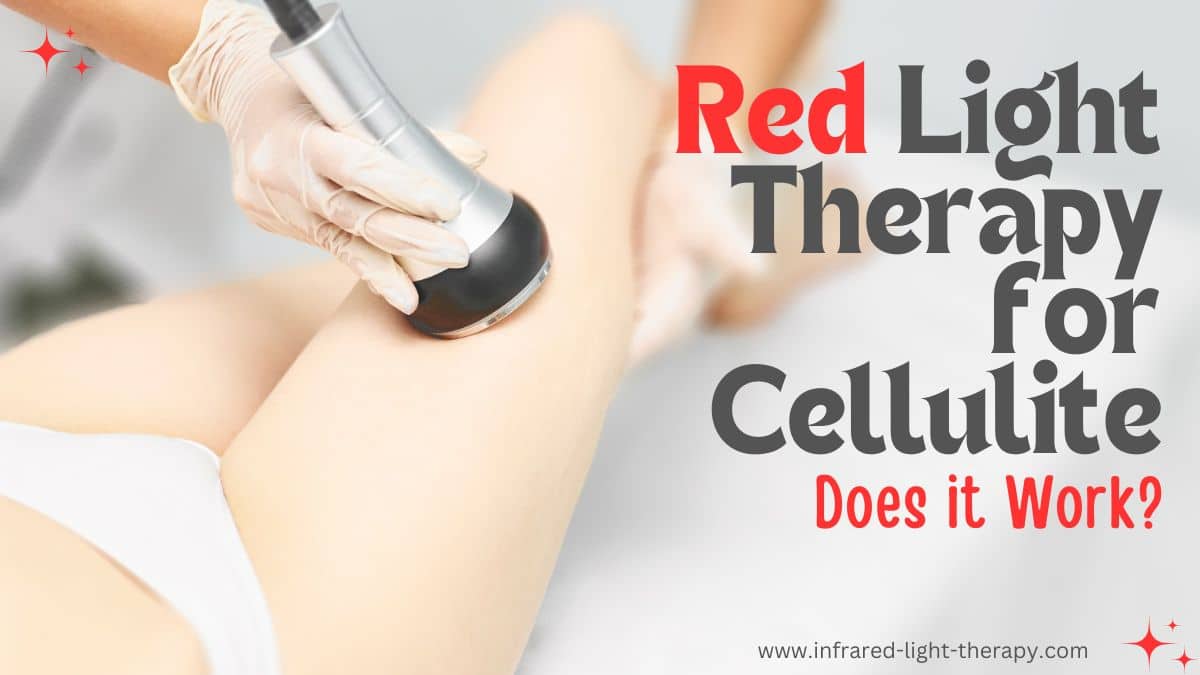
If you have cellulite on your thighs, hips, butt, or arms, you already know the frustrating part:
You can exercise, drink water, use creams, lose weight, and still see dimples.
That’s because cellulite is not just “extra fat.”
It also involves connective tissue, skin structure, circulation, hormones, and the way fat pushes against the skin.
So when people hear that red light therapy may help with cellulite, the real question is usually:
Is this actually real, or just another expensive cellulite gadget?
The honest answer:
Red light therapy can help improve the appearance of cellulite, especially when combined with massage, vibration, exercise, or topical treatment.
But it is not a magic cellulite remover, and the type of device matters.
In this guide, I’ll show you what the research actually says, which at-home options make the most sense, and how to avoid wasting money on weak beauty gadgets.
Does Red Light Therapy for Cellulite Work?
It may help, but usually not by itself.
Red light therapy and low-level laser therapy have shown promise for cellulite, especially when used with massage, vibration, topical gel, or exercise.
But that does not mean every cheap red light gadget will remove your cellulite.
Most studies measure things like:
- Thigh circumference
- Fat thickness
- Cellulite grade
- Skin elasticity
- Skin texture
That is different from saying “cellulite disappears.”
For example, this study found that low-level laser therapy combined with vibration therapy helped reduce localized adiposity and fibrous cellulite.
Another small randomized, double-blinded study found positive results when red and near-infrared LED exposure was combined with an anti-cellulite gel over 3 months.
So yes, red light therapy may be worth trying.
But the realistic goal is:
Smoother-looking skin, less obvious dimpling, and better texture over time.
Not cellulite gone forever.
What the Research Actually Used
This is important.
Most cellulite studies did not test a random, cheap red light beauty tool.
They often tested:
- Low-level laser therapy
- Red or near-infrared LED exposure
- Vibration or massage
- Topical anti-cellulite gel
- Exercise combined with light therapy
- Treatment protocols that lasted several weeks
That matters because a weak handheld device with vague specs is not the same thing as a studied treatment protocol.
This is why I’m careful with cellulite claims.
A device may help, especially when used consistently, but I would not buy anything that does not clearly explain what type of light it uses, how to use it, or what result you can realistically expect.
👉 If you want to try red light therapy for cellulite at home, here are the most practical device types based on current research:
This post may contain affiliate links at no extra cost to you.
What Type of Device Works Best for Cellulite?
For cellulite, I would look for a device that combines at least one of these:
- Red light, often around 630-660 nm
- Near-infrared light, often around 810-850 nm
- Massage or vibration
- Enough coverage for the area you want to treat
- Clear instructions and realistic treatment times
For skin texture and surface appearance, red light may be useful.
For deeper body areas, near-infrared is often used in body-focused devices.
But the biggest thing is this:
Do not buy a device just because it glows red.
Most cheap beauty tools look similar in photos, but they may not deliver the same intensity, coverage, or treatment design used in studies.
How Does Red Light Therapy Reduce Cellulite?
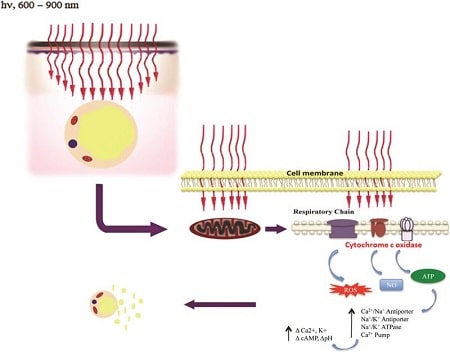
Red light therapy does not “melt cellulite” in the simple way some brands claim.
The possible benefits are more realistic than that.
It can help by supporting:
1. Localized body contouring – Some studies on low-level laser or light therapy show changes in circumference or fat thickness, especially when combined with vibration, massage, topical treatment, or exercise.
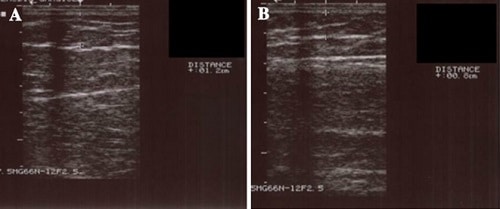
(Source)
2. Skin texture and firmness – Separate red and near-infrared skin studies suggest these wavelengths can help skin appearance and collagen-related changes, but smoother skin is not the same thing as cellulite disappearing completely.
3. Smoothing through massage – When light therapy is combined with massage or vibration, the massage itself may help the area look smoother by improving the way fluid and tissue move.
4. Consistency – This is the boring part, but it matters most. The studies usually run for weeks, not days. If you use a device twice and quit, you probably will not know if it could have helped.
Cellulite vs Fat Reduction: Not the Same Thing
Cellulite is not just extra fat.
It happens because of:
- Changes in the connective tissue under the skin
- Fat pushing up against weakened tissue
- Loss of collagen strength
- Poor circulation in the area
Some red light therapy studies measure fat thickness only. That is different from measuring visible cellulite improvement
How to Use Red Light Therapy for Cellulite at Home
There are plenty of ways to use red light therapy for cellulite at home in a way that will finally work.
You will get the results you want from a high-output LED device that can deliver the light intensity needed for absorption into the body’s tissues.
You’ll get the best results by combining red and NIR (near infrared) light.
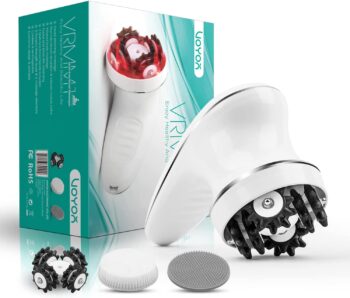
1. Infrared Slimming Massager for Cellulite
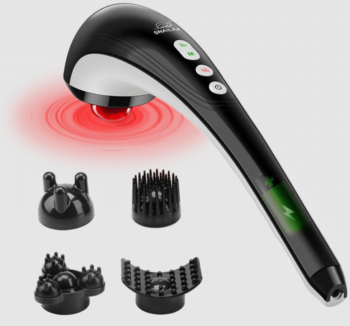
✅ Best for – small, stubborn cellulite areas on thighs, hips, butt, or arms
❌ Skip if – you want full-body treatment or hate manual massage
If your cellulite is mostly on your thighs, hips, or arms, this type of device makes the most sense.
It combines vibration massage with infrared heat, which studies suggest may help reduce localized fat thickness when used consistently.
Some studies show that when red light therapy is combined with massage, it can help reduce small areas of fat under the skin.
This study has proven that combining vibration massage with infrared light therapy results in a “significant reduction of fat thickness”.
This fat thickness reduction was proven with objective tools such as photographic evaluation, blood tests, and echographic evaluation.
Another study has found:
The low-level, dual-wavelength laser energy and massage device safely improves the appearance of cellulite while reducing thigh circumference
If you already massage your thighs or hips, switching to a device that combines massage and red/infrared light (like this one) makes more sense than massage alone.
👉 If you like the idea of combining warmth and massage, you can compare the best infrared body massagers here.
Choose an infrared massager if:
- You have small, localized cellulite areas
- You want a lower-cost option
- You prefer combining massage & light

You can use your infrared massager to naturally and effectively relieve muscle pain anywhere in your body.
2. Anti-Cellulite Gel & Red Light Therapy
✅ Best for – mild to moderate cellulite and people who are consistent with topical routines
❌ Skip if – you won’t apply gel regularly
If you are already using a gel and not seeing results, adding red and near-infrared light can increase absorption and improve visible smoothing over time.
A promising study has found that 90% of subjects, treated twice a day with an anti-cellulite gel and 15-minute red & infrared LED light therapy twice a week, were downgraded to a lower cellulite grade by clinical examination, digital photography, and pinch test assessment.
The results of this small but well-documented, randomized, double-blinded study:
Eight of nine thighs with Grade II-III cellulite responded positively to a novel, combined 3-month treatment program of a phosphatidylcholine-based, anti-cellulite gel and LED exposure, as determined by the clinical determinants obtained
Treat your cellulite areas with a good anti-cellulite gel twice a day, and use a red light therapy massager, an infrared heat lamp, or a professional LED Panel twice a week for 15 minutes.
Choose red light and gel if:
- Your cellulite is mild to moderate
- You are consistent with daily topical use
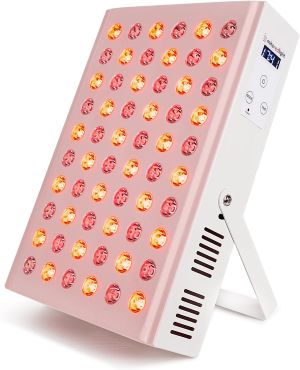
3. Red Light Therapy Panel – Best for Larger Areas (and Better Specs)
✅ Best for – larger body areas and people who want one device for skin, pain, recovery, and body use
❌ Skip if – you want massage built in or want the cheapest option
If you want more control over wavelength, treatment distance, and coverage, a red light therapy panel may make more sense than a small cellulite massager.
A panel is not as convenient for rubbing over the thighs, but it can cover larger areas like the hips, butt, stomach, thighs, and legs.
It also gives you more uses beyond cellulite:
- Face and skin aging
- Sore joints
- Back pain
- Muscle recovery
- General body use
Choose a red light therapy panel if you want red and near-infrared light, you want to treat larger areas, and you also care about skin aging, pain, or recovery.
Skip it if you want massage at the same time, you need the cheapest option, and you know you won’t sit or stand in front of it consistently.
👉 If you want a larger surface area for body use, red light therapy mats are another option worth comparing.
4. Infrared Sauna (Or a Sauna Blanket)
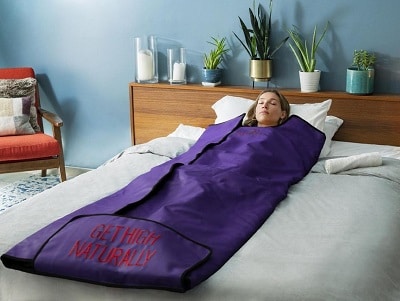
An infrared sauna is not the same thing as red light therapy.
Red light therapy uses specific red or near-infrared wavelengths aimed at tissue response.
An infrared sauna mainly uses heat to warm the body and make you sweat.
That does not mean the FIR sauna is useless.
It can support:
- Sweating
- Relaxation
- Muscle recovery
- Circulation
- A full-body wellness routine
But I would not buy an infrared sauna only for cellulite.
The direct evidence for sauna alone removing cellulite is limited.
Where sauna makes more sense is when cellulite is only one part of your goal, and you also want help with stiffness, recovery, stress, sweating, and general heat therapy.
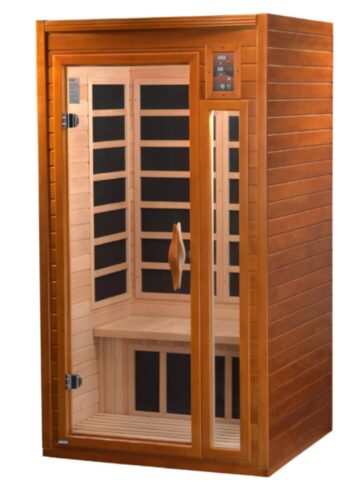
👉 For a lower-cost full-body option, compare the best portable infrared saunas here, or learn how to build a near infrared sauna at home – for about $100.
5. Exercise & Infrared Light Therapy
✅ Best for – people already exercising who want to support smoother-looking skin and recovery
❌ Skip if – you expect light therapy to replace movement or strength training
Exercise helps cellulite mainly by supporting muscle tone, circulation, and body composition.
But cellulite is not just a “fitness problem.”
Many fit women still have cellulite.
That’s why I do not like advice that makes women feel like they just need to work harder.
If you already exercise, adding red or near-infrared light can support your routine without adding another workout.
Some studies suggest light-based therapy can improve body measurements when combined with exercise or other treatments, but the result still depends on consistency, the device, and your starting point.
How Long Does It Take to See Cellulite Improvement?
Most cellulite-related studies run for about 4 to 12 weeks.
That means you should not judge results after one or two sessions.
For home use, I would give it at least 6 to 8 weeks before deciding if it is helping.
Most people who see improvement are usually doing more than one thing:
- Light therapy
- Massage or vibration
- Topical care
- Exercise
- Consistent maintenance
Conclusion: Is Red Light Therapy Worth Trying for Cellulite?
Red light therapy may be worth trying for cellulite if you understand what it can and cannot do.
It is not a miracle cure.
It will not erase cellulite overnight.
And it works best when it is part of a routine that may include massage, vibration, movement, topical care, or heat therapy.
But if your goal is smoother-looking skin, better texture, and a natural at-home tool you can use consistently, red and near-infrared light is worth a try.
For most people, I would start small:
- A targeted infrared slimming massager for thighs or hips
- A red light massager if you already use anti-cellulite gel
- A red light panel, if you also want face, body, pain, and recovery benefits (or red light therapy mats)
- A sauna blanket only if you want full-body infrared therapy beyond cellulite
The key is not buying the fanciest device.
It is choosing the one you will actually use for the next 6 to 12 weeks.
To your health and happiness,
Meital
Studies
Avci, Pinar et al. “Low-level laser therapy for fat layer reduction: a comprehensive review.” Lasers in surgery and medicine vol. 45,6 (2013): 349-57. doi:10.1002/lsm.22153
Savoia, Antonella et al. “Low-level laser therapy and vibration therapy for the treatment of localized adiposity and fibrous cellulite.” Dermatology and therapy vol. 3,1 41-52. 23 May. 2013, doi:10.1007/s13555-013-0026-x
Wunsch A, Matuschka K. A controlled trial to determine the efficacy of red and near-infrared light treatment in patient satisfaction, reduction of fine lines, wrinkles, skin roughness, and intradermal collagen density increase. Photomed Laser Surg. 2014;32(2):93–100. doi:10.1089/pho.2013.3616
Savoia, A., Landi, S., Vannini, F. et al. Low-Level Laser Therapy and Vibration Therapy for the Treatment of Localized Adiposity and Fibrous Cellulite. Dermatol Ther (Heidelb) 3, 41–52 (2013). https://doi.org/10.1007/s13555-013-0026-x


Would using red light therapy reduce the fat on the face if red light therapy is used on it? I am using it for anti-aging but do not want the fat reduced on my face.
It will not reduce fat on your face. Don’t worry about that. :)