

Is there a safe, non-invasive, drug-free, low-cost, and highly effective way to relieve your knee pain and heal your knee?
Yes—photobiomodulation (PBM), often called low-level laser therapy (LLLT) or red/near-infrared (NIR) light therapy, is a non-invasive, drug-free option with a strong safety profile that’s shown in randomized trials and meta-analyses to reduce pain and improve function in knee osteoarthritis – when dosed correctly.
⚠️ Important: PBM (cold laser/LED) is not the same as far-infrared (FIR) heat pads/braces. PBM is non-thermal light that triggers cellular signaling; FIR provides heat.
They’re different modalities with different evidence levels and use cases.
In a hurry?
Jump to the Best infrared devices for knee pain
This post contains affiliate links.
What the Research Actually Says About IR for Knee Pain
Let’s make this simple.
A few randomized controlled trials and many meta-analyses have looked at photobiomodulation for knee osteoarthritis.
Here’s what they consistently show:
- When the correct wavelength and dose are used, PBM can significantly reduce knee pain compared to placebo treatment.
- Many studies also show improvements in physical function, including walking, stair climbing, and daily movement.
- Some trials report reduced swelling and a better range of motion after several weeks of treatment.
- Results are not automatic. When studies use the wrong dose, the wrong wavelength, or weak devices, the results are often mixed or negative.
In other words, light therapy can work very well for knee pain, but only when it is dosed correctly.
That is why the type of device and how you use it matter so much.
What Is PBM, Really? (And Why It’s Not Just “Heat”)
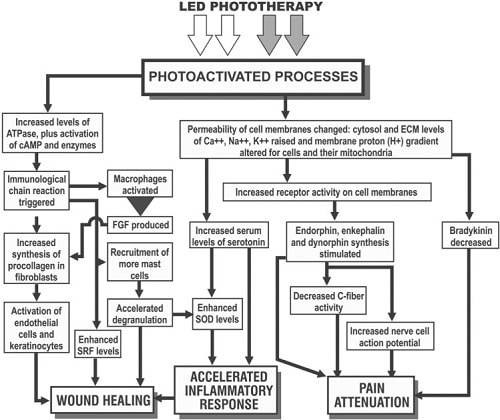
PBM uses visible red (≈630–670 nm) and/or NIR (≈780–950 nm) light from lasers or LEDs to promote cell metabolism (not to heat tissue).
The main light-absorber is cytochrome-c oxidase in mitochondria, which can lead to more ATP, nitric oxide signaling, and downstream anti-inflammatory effects.
Depth & expectations:
Direct photons don’t freely shoot 5 cm into a knee; actual optical penetration in living tissue is limited (on the order of ~1 cm scale depending on tissue type), and deeper benefits may include indirect vascular/neural signaling.
So, results build over weeks, not always instantly.
8 Benefits of Infrared Light Therapy for Knee Pain
Here’s why you may want to try using LLLT at home to heal your knee pain:
- Easy to apply and use at home
- Available to you 24/7
- Safe and side-effect free (more on that below)
- Nontoxic, non-invasive, drug-free
- Cost-effective
- Superior to medication, shots, and can prevent surgery
- Works synergistically with chiro treatments, acupuncture, and PT treatments.
But Wait! There’s More:
There are endless uses for a cold laser home device, other than knee pain:
- Neck and back pain
- Joint pain
- Bursitis
- Tendonitis
- Plantar Fasciitis
- And any other inflammation-related ailments
How to Use Light Therapy for Your Knee Pain
Aim for wavelengths in the red (630–670 nm) and near-infrared (780–900 nm) range.
Typical good at-home routines:
- 10-20 minutes per knee session
- 3-5 times per week
- Continue for 4-8 weeks to see meaningful reductions.
Always follow your device manual and avoid direct eye exposure.
Which Type of Infrared Device Is Best for Knee Pain?
Not all light devices are built the same. Here are the main options:
Targeted Knee Braces (Red + NIR LEDs)
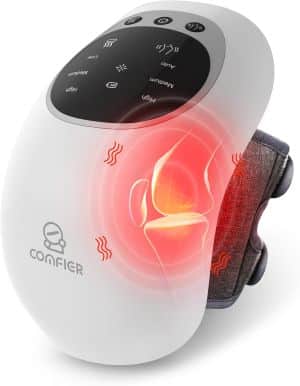
Best for focused joint treatment.
These wrap around your knee and deliver light directly to the painful area.
👉 See my full guide to the best red light therapy wraps here.
Red Light Therapy Panels
Best if you also have back, hip, or shoulder pain.
Panels treat larger areas and are often more powerful than small wraps.
👉 See the best red light therapy panels in my best red light therapy devices post.
Infrared Knee Heating Pads (FIR Heat)
Best for stiffness and comfort.
These use heat, not PBM. They can help circulation and muscle relaxation, but are different from non-thermal photobiomodulation.
👉 Compare the best infrared knee heating pads here.
Most people report noticeable pain relief after the first treatment, but results are cumulative, so the more you use i,t the better you’ll get.
Other people need a few more treatments to get results, and it’s recommended to keep treatment going at least once a day for a month.
Home lasers save you time and a lot of money, and you can use them whenever you or your family (and friends) need them.
How Long Do You Have to Continue Treatments? (Science-Based Answer)
Most clinical studies have reported positive results after at least 4 weeks of treatment (at least twice a week), and many have continued to 8 weeks of LLLT treatment.
Is Infrared Therapy Safe for Knee Pain?
According to studies in the last 30 years, cold laser is proven to be safe to use and has no side effects when used for arthritic knee or any kind of pain and inflammation.
However, I would advise you to avoid pointing the laser to suspicious or cancerous lesions and to avoid if you are pregnant.
Also, do not look directly at the light source to keep your eyes safe. If you can’t help yourself, use these eye protection glasses.
Does Infrared Light Therapy Regrow Cartilage?
Short answer: No. Current clinical evidence does not show that infrared or red/NIR PBM regrows cartilage in people.
Lab and animal studies show photobiomodulation can help cells involved in cartilage produce more matrix and reduce inflammatory damage, which might support cartilage health at a cellular level.
But this is preclinical research, not proven cartilage regrowth in humans.
Conclusion: Is Infrared Light Therapy Worth Trying for Knee Pain?
If you’re dealing with knee pain from osteoarthritis, stiffness, or chronic inflammation, photobiomodulation is one of the safest non-drug options you can try at home.
Clinical studies show it can reduce pain and improve function – especially when the correct wavelength and dose are used consistently for several weeks.
It will not regrow cartilage, and it is not an overnight miracle cure.
But for many people, it becomes a powerful long-term tool for managing knee pain naturally.
The key is choosing the right type of device and using it correctly.
To your health and happiness,
Meital
Studies
Stausholm MB, Naterstad IF, Joensen J, et al
Efficacy of low-level laser therapy on pain and disability in knee osteoarthritis: systematic review and meta-analysis of randomised placebo-controlled trials
BMJ Open 2019;9:e031142. doi: 10.1136/bmjopen-2019-031142
Hello,
My mom is having knee replacement surgery. What type of infra-red ligjt therapy device would help speed recovery if any?
I would suggest a red light therapy wrap that produces only low heat can be wrapped around the knee, once the initial inflammation subsides (a few days). Another option is a small red light therapy panel that can be placed near the knee. Red light therapy is proven to heal wounds faster and promote healing. Good luck!
Yes I did. Thanks for bringing this to me attention, it’s a typo. I’ll fix it now.
Have been taking the dog weekly for lazer therapy for a torn ACL . Not much improvement. I was doing infrared until it fell and broke so now I need a better one. I noticed his leg wasn’t much warmer than when I did the infrared at home. Do you think it is the same . It was 18 dollars a treatment at the vet.
Infrared and low level laser is the same. But, I don’t know about the strength of the unit at your vet. You can always try getting him a small jade infrared heating pad and put it where he sleeps and turn it on when he is sitting there or sleeping. The good ones come with a timer and shut off automatically.
Will the simple 250 Infared bulb help with knee pain. If so how will it compare to cold laser that this article is talking about?
Thank you!
Mary,
Infrared is the same as cold laser. You can try the infrared bulb first and if it doesn’t work you can try the other products mentioned in the post. Good luck!
Hi, my wife has rheumatoid arthritis I have just got her a infrared lamp, you say use it for 5 to 10 minutes a day, what distance should it be kept at, please.
Cheers
Derrick
The distance you should keep from the infrared lamp depends on its strength. For a 150-watt bulb you should keep at least 12 inches distance, and for a 250-watt bulb – stay at least 24 inches away from it. Also, listen to your body and when it feels too hot – get even further away from it. The infrared lamp treatment should feel comfortable.
Thank you for your reply.