Heated socks are not just for cold weather.
For people with neuropathy, diabetes, poor circulation, or chronically cold feet, the right heated socks can help improve blood flow and relieve foot pain when used correctly.
If you are searching for heated socks for neuropathy, the key is not maximum heat.
It is safe, controlled warmth that supports circulation without increasing the risk of burns or skin irritation.
That is why the difference between infrared (ceramic) socks and battery-powered electric heated socks matters.
In this guide, you will see how each type works, which is safer for nerve pain, and which heated socks are best for different neuropathy symptoms before choosing the right pair.
Key Takeaways
- Battery-heated socks are usually better for moderate neuropathy with cold, numb feet, while infrared socks are better for mild neuropathy or all-day gentle warmth.
- The safest choice is not the hottest sock. For neuropathy, controlled warmth, lower settings, and regular skin checks matter more than maximum heat.
- If you have severe numbness or major loss of sensation, heated socks are not a good DIY solution without medical guidance.
- For diabetes or very sensitive feet, non-electric infrared socks are usually the safer starting point, especially if you want gentle warmth without burn risk.
Short on Time?
Compare the best heated socks for neuropathy by heat type and levels, material, and price.
(This post may contain affiliate links, at no extra cost to you)
What Heated Socks Do for Neuropathy In Your Feet
Heated socks help maintain warmth and support blood flow in the feet, which can be especially important for people with peripheral neuropathy – a condition where nerve damage reduces sensation and impairs circulation.
Poor circulation and nerve damage make the feet more vulnerable to cold, and keeping your feet warm can make them more comfortable and may reduce pain and stiffness.
It is important, however, to use safe, controlled heat with neuropathy, because nerve damage can make it difficult to feel temperature. Uncontrolled or too-hot heat sources (like open heaters or hot water bottles) can cause burns without warning.
Electric vs. Infrared Socks
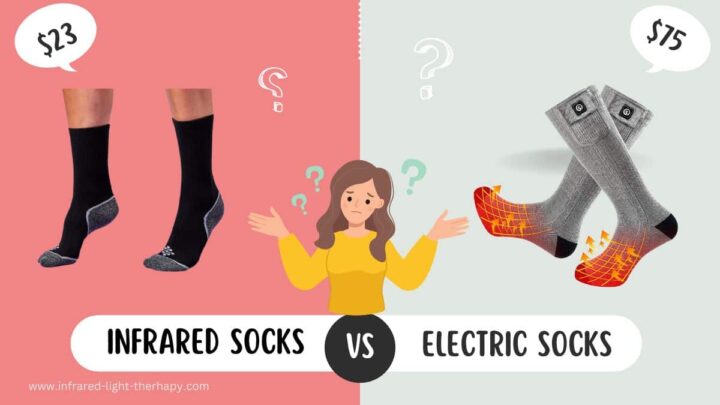
While both infrared socks and battery-powered socks are designed to keep your feet warm, they work in different ways, feel different, and differ in price.
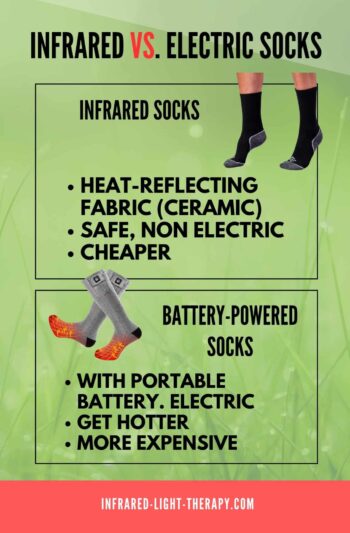
Infrared socks are made from heat-reflecting fabric (ceramic), which uses your body heat to reflect infrared rays back to your feet, while battery-heated socks use electricity (through a small battery connected to tiny wires) to generate heat (up to 130 degrees Fahrenheit).
(Think of it as warming a slice of bread between your palms, compared with putting it in a toaster).
The main differences between these two types of socks are the heat source, power source, heating time, temperature control, mobility, safety, maintenance, and cost.
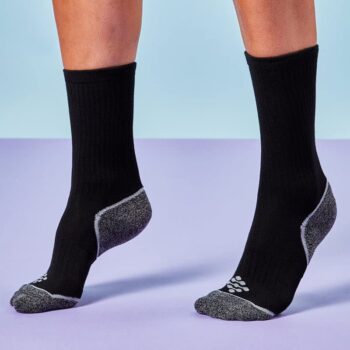
- Best for – Mild neuropathy or chronically cold feet when you want all-day warmth without batteries.
- Not ideal for – Moderate to severe neuropathy that requires active heat to raise foot temperature.
Infrared socks are slightly better than regular thick warming socks and are perfect for ski trips or working outside in the cold weather.
They can be used just like regular socks all day long.
However:
They cannot raise your feet’ temperature enough to significantly boost blood circulation, reduce inflammation, and promote oxygen delivery and pain-relieving components to your feet.
The best electric socks can reach up to 150 degrees Fahrenheit and are timer-controlled, so you can decide how long you want your thermal foot therapy treatment to last (but you’ll have to remember to charge them 😉)
This makes them a better choice for people suffering from neuropathy, heel pain, and poor blood circulation (Raynaud’s disease, Diabetes, etc.)
For example, the Sun Will Heated Socks offer 3 heat settings, reach up to 150°F, come with a separate Bluetooth controller, and the batteries are ergonomically curved to fit your leg so they don’t bother you.
On the other hand, electric socks need to be handled with more care – you can’t just toss them in the washing machine when you’re done.
Plus, you always need to have a way to charge them (if you spend a lot of time outside).
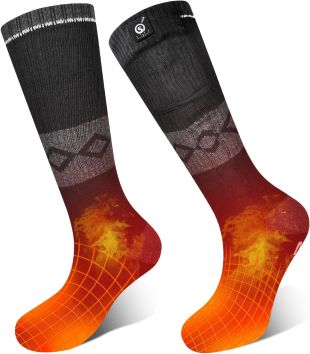
- Best for – Neuropathy with cold, numb feet when you need adjustable, active heat to boost circulation.
- Not ideal for – Severe numbness where you may not feel if the heat is too high, or for sleeping.
So, which heated socks are better for neuropathy?
- Mild neuropathy or cold feet only – Infrared socks
- Moderate neuropathy with numbness or pain – Battery-heated socks
- Severe neuropathy or loss of sensation – Neither without medical guidance
How Do Infrared Socks Work?
Infrared socks are socks that are infused with over 20 types of ceramics and minerals, which activate when in contact with heat, such as the natural infrared energy your body emits.
To manufacture these socks, these ceramics and minerals are transformed into a liquid state and fused into Polypropylene fibers, which are woven into bio-ceramic fabric.
Bio Ceramic fabric is used to make thermal clothing such as infrared gloves, heated vests, wrist warmers, jackets, pillowcases, and anything you can imagine. It is also used inside some compression socks.
Most bio-ceramic infrared socks reflect far-infrared heat generated by the body, but they do not actively emit therapeutic near-infrared wavelengths at controlled doses, which limits their impact on circulation compared to powered heat.
Infrared socks come in different sizes, coverage (some cover the calf too), and compression levels.
Pros
- Comfortable and can be worn like regular socks
- No electric wires or batteries that can malfunction
- Machine washable
- No side effects or dangers
- Do not cost more than regular warming socks, and much less than electric socks
Cons
- Limited ability to raise foot temperature compared with rechargeable ones
What Are the Best Infrared Socks?
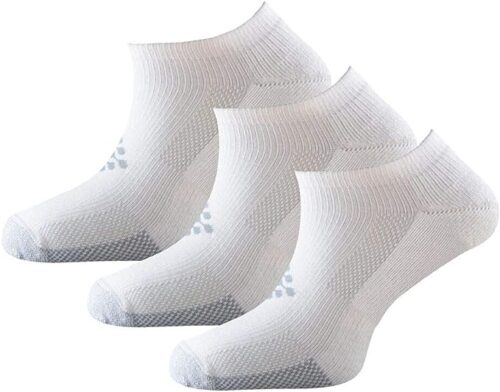
Through my research, I’ve found the best infrared socks to be True Energy infrared socks, which are made of a blend of yarn that contains infrared nano-particles.
The nano-particles capture the body’s heat and expand the capillaries in the feet, which improves circulation and stimulates cellular recovery.
The socks provide gentle compression and warmth, and they are comfortable to wear all day.
They also have arch compression and support, and they are anti-odor and antibacterial.
The socks are thick, which makes for comfy cushioning during hikes, and there is more compression around the toes than at the heel.
How Do Electric-Heated Socks Work?
Most rechargeable heated socks are powered by slim lithium-ion batteries that tuck into a pocket on the upper calf and are charged with a USB cable. They are attached to thin electric wires embedded inside the heat-safe materials.
When you turn them on, a low electric current will pass through the wires and warm your feet and toes.
Most pairs keep the heat for 3-8 hours on a full charge, and some claim up to 12 hours of constant heat. Obviously, the lower the heat setting you choose, the longer they last. The medium setting seems to work best for most people.
For example, the Savior Heated Socks use lithium-ion rechargeable 7.4V 2200mAh batteries, which will last for 6.5 hours on the lowest setting and 3.5 hours on the medium setting.
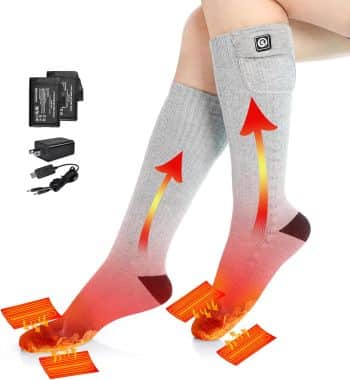
- Best for – Neuropathy, Raynaud’s, or poor circulation when consistent toe and foot heat is needed.
- Not ideal for – people who forget to recharge batteries
👉 Using a simple infrared forehead thermometer, you can check your feet’ temperature before and after using battery-heated socks. My results were 76.1 degrees with achy toes before, and 105.6 degrees and pain-free toes after.
What Are the Best Battery-Operated Socks?
Before you purchase rechargeable heated socks, make sure the heating elements are thin and lightweight, the battery lasts for at least 3 hours of continuous heat, and the size fits your feet and shoe/boot size.
Also, it’s important to check how long they take to heat up.
For example, one of my favorites – the Day Wolf Heated Socks – has a slim battery that lasts for 7 hours, reaches up to 131 degrees Fahrenheit, and takes 8 minutes to heat up.
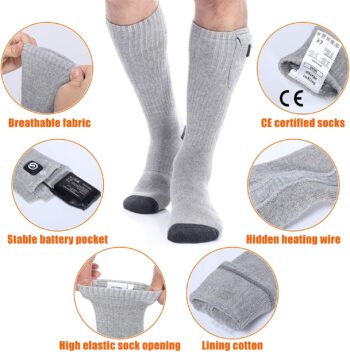
- Best for – Neuropathy-related cold feet during outdoor use when longer battery life matters.
- Not ideal for – People who want instant heat or fully machine-washable socks without battery removal.
Day Wolf has been making outdoor apparel for many years, and their experience is evident.
With a press of a button, you turn them on and choose the temperature.
They heat up in 8 minutes and reach the temperature in 15 minutes, and the result is toasty warm arches, soles, ankles, and toes.
Note that they are not machine washable, but you can hand-wash them once you remove the batteries.
Are Heated Socks Safe for Feet with Neuropathy?
When it comes to heated socks for neuropathy, safety isn’t optional: it’s essential.
People with neuropathy – especially diabetic peripheral neuropathy – often have reduced ability to feel temperature changes in their feet.
This means they may not realize when the heat is too intense, increasing the risk of burns, including serious or deep burns, even at moderate temperatures.
Even heated socks with therapeutic intent should be used with caution, controlled heat settings, and regular skin checks when sensation is reduced.
Here’s how to reduce the risk:
- Begin on the lowest heat setting each time you wear heated socks.
- Avoid wearing heated socks while sleeping if they are not explicitly designed for overnight use.
- Check your feet frequently (every 20–30 minutes) for redness, blistering, or tenderness.
- Stop using it immediately if you notice any signs of irritation or unusual warmth.
Since infrared socks are non-electric, the only side effects can be some discomfort from sweating and some drying of the skin, especially if you already have dry feet.
👉 If your feet tend to sweat, choose heated socks made with a special cooling fabric, such as the Snow Deer Heated Socks.
Are Heated Socks Good for Diabetes?
People with Diabetes tend to suffer from poor blood circulation in their feet.
A study published in the journal Diabetes Care found that heat therapy applied to the feet was effective in improving blood flow, which is important for preventing wounds and ulcers.
However, we recommend choosing infrared socks over electric socks to avoid the danger of skin burns, and to make sure they are not too tight (non-binding loose) to avoid interfering with blood flow to the feet.
For example, the Circufiber (USA-made) Diabetic socks contain 47% infrared fabric for that extra warmth and have a non-binding and non-chafing cuff design to prevent them from slipping down to your ankles.
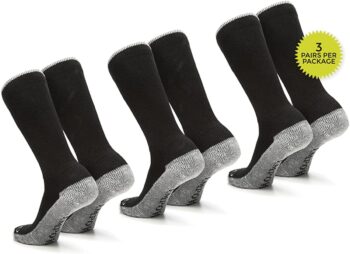
- Best for – Diabetic neuropathy with sensitive skin who need gentle warmth and a non-restrictive fit.
- Not ideal for – people who want a noticeable temperature increase or fast pain relief from heat.
For diabetes-related cold feet or poor blood flow, infrared therapy devices for neuropathy that gently stimulate circulation without high surface heat may be a safer long-term option than electric socks.
Before You Go…
Infrared light therapy and thermal therapy are known and proven to be very helpful for all blood circulation problems, foot pain, swelling, and low energy.
See the best infrared therapy home devices to treat your aches and pains naturally, without any side effects.
To your health and happiness,
Meital