
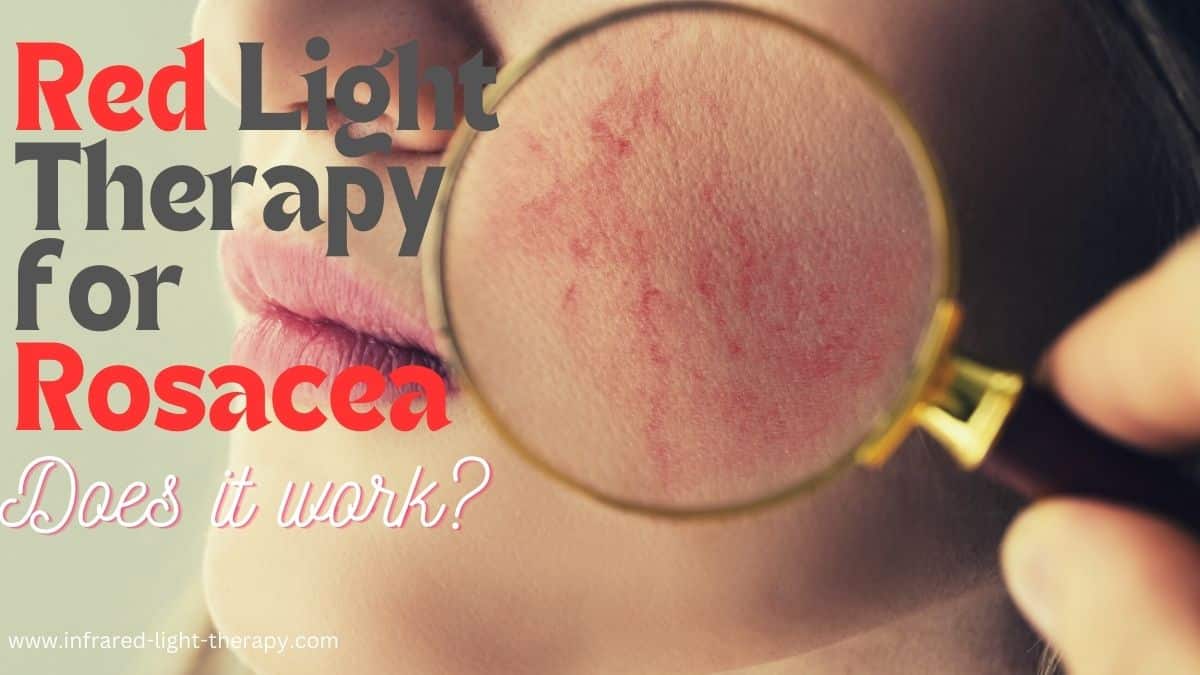
Rosacea is not just redness.
It’s chronic inflammation, visible blood vessels, sensitivity, and flare-ups triggered by heat, stress, and skincare products.
Recent dermatology research suggests that specific red and near-infrared wavelengths may help calm inflammation, reduce flushing, and strengthen the skin barrier – without medication.
Here’s what the science actually says about red light therapy for rosacea, which wavelengths matter, who should avoid it, and how to use it safely at home.
What Type of Rosacea Do You Have?
Red light therapy may work differently depending on the subtype:
- Persistent redness (erythematotelangiectatic)
- Acne-like rosacea (papulopustular)
- Thickened skin (phymatous)
- Ocular rosacea
Most evidence supports use for inflammatory redness and papulopustular types.
👉 In a Hurry?
Don’t want to read all the science?
Jump straight to the safest and most effective red light therapy devices for rosacea, so you can choose the right one in minutes.
Can Red Light Therapy Help With Rosacea?
What Does Research Actually Show?
- Red light (630–660 nm) has been shown to reduce inflammatory markers
- Near-infrared (830–850 nm) may improve circulation and tissue repair
- Photobiomodulation supports ATP production and nitric oxide release
Red light therapy is proven to work behind the scenes to fight off redness and irritation. It helps to calm down skin inflammation, increase collagen, and promote a healthier overall appearance of your skin.
The book “Light Years Ahead” has collected many studies showing that visible red light (in the range of 630 nm to 700nm) can boost the skin’s healing rate by 200%.
Red light therapy involves exposing your skin to strong sources of visible red light (610-700 nm), usually through LED light therapy.
(The same light wavelength was also proven to accelerate diabetic wound healing)
Red Light Therapy Benefits for Rosacea
Here are the proven benefits of phototherapy for your skin:
1. Low-Level Laser Therapy has repeatedly been proven to naturally reduce inflammation and pain.
When you control inflammation, it reduces swelling, redness, itching, and pain.
2. It is proven to boost skin healing.
3. It prevents the worsening of existing rosacea symptoms
4. It is safe and generally side-effect-free for daily use for people of all ages
5. It is easy and simple to use at home and requires little time and effort
6. It is painless and non-invasive
7. It does not lose effectiveness over time
How to Use Red Light Therapy for Rosacea Safely
- Wavelength: 630-660 nm (primary), 830–850 nm optional
- Session length: 5-10 minutes
- Frequency: 3-5 times per week
- Distance: Follow manufacturer guidelines
- Skin must be clean
- Avoid if skin is actively flaring with heat
Can It Make Rosacea Worse?
Red light therapy is generally considered low risk. However:
• Too much heat may trigger flushing
• Devices with very high irradiance may irritate sensitive skin
• Always start with short sessions
The 4 Best Red Light Therapy Devices for Rosacea
There are a few important questions to answer before you decide:
1. Do you need a handheld device or a large 2-panel device?
A large red light therapy system can cover your entire face in one treatment, but if your Rosacea is located only around your cheeks, you may not need it.
If you need to travel with your device, you’ll need a handheld device.
2. How much will you be able to spend?
Red light home treatment for Rosacea depends a lot on your patience and consistency.
You’ll have to treat yourself every day for at least a few minutes to see results and keep them.
Red light therapy panels require no effort but are more expensive, while handheld devices require manual effort (to move them around the affected areas) – but are less expensive.
👉 See all the best Red LED light therapy home devices – for every need and budget!
1. Lightstim for Rosacea – Best Handheld for Targeted Cheek Flushing
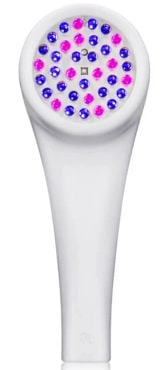
- Best for – Localized redness, papulopustular rosacea, sensitive skin
- Technology – Red and Blue LED
- Treatment time – 3 minutes per area
The LightStim is ideal if your rosacea is concentrated on the cheeks, chin, or nose rather than your entire face.
Because it’s handheld, you can control exactly where the light is delivered, which is especially helpful if some areas flush more easily than others.
The red light supports inflammation control and skin repair, while the blue light can help reduce acne-type breakouts sometimes associated with rosacea.
Since it does not generate significant heat, it’s generally better for heat-sensitive skin compared to stronger panel systems.
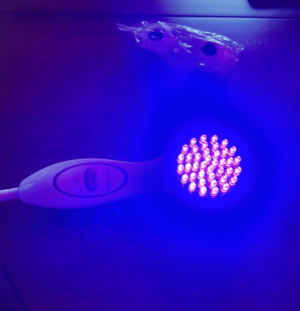
It’s very easy to use – you just place it over the affected area and hold it there for 3 minutes, then move on to the next area. Do not overuse and go over the recommended treatment time.
2. dpl IIa LED Panel – Best High-Coverage Panel
Revive Light Therapy also offers an excellent LED light therapy panel – the dpl IIa. You can see my full reviews in my Revive Light Therapy reviews post.
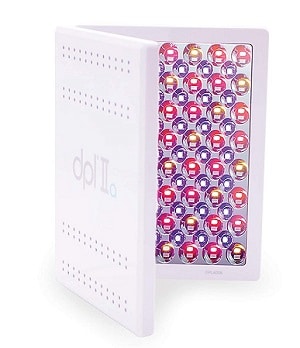
- Best for – people already experienced with LED therapy
- Coverage – Full face at once
- Treatment time – 10-14 minutes
A panel system allows uniform, hands-free facial treatment and often includes red and near-infrared wavelengths.
Because panels can feel stronger than masks, start conservatively if your rosacea is heat-sensitive.
3. LED Light Therapy Face Mask – Best Full-Face Coverage
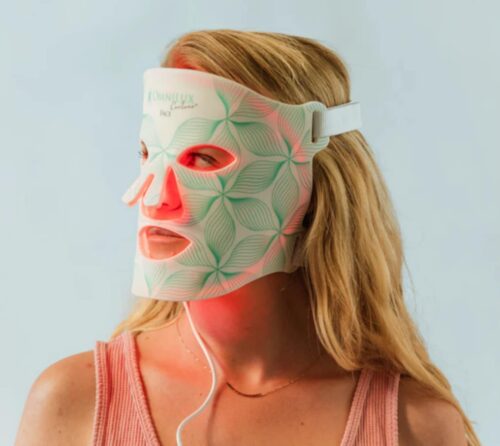
- Best for – persistent redness and inflammation across the entire face, including rosacea-prone skin
- Technology – medical-grade red (633 nm) and near-infrared (830 nm) LEDs
- LEDs – Count about 132 medical-grade diodes
- Treatment time – 10 minutes per session, 3–5 times per week
- Safety – FDA-cleared flexible LED mask
The Omnilux Contour Face Mask combines red (633 nm) and near-infrared (830 nm) light – the same wavelengths shown in skin therapy studies to support circulation, calm inflammation, and stimulate collagen and cellular repair.
This flexible silicone mask wraps comfortably around your face and delivers light energy to larger areas than handheld devices.
Because it uses wavelengths shown to penetrate into the skin, it can help reduce persistent redness, relieve inflammation, and support a healthier skin tone – if you use it consistently over weeks.
👉 See the difference between LED Masks and Panels
4. Red LED Light Therapy 38 LED Bulb – Best Budget Option for Mild Rosacea
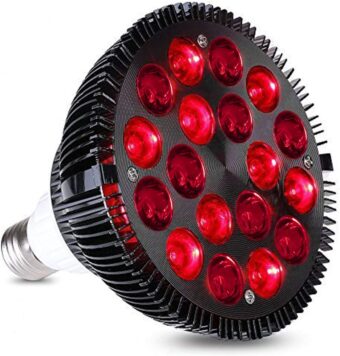
- Best for – Mild redness, supplemental therapy
- Technology – 650 nm red & 850 nm near-infrared
- Irradiance – 141 mW/cm²
If you’re just starting or want the lowest-cost option, a red LED bulb can deliver appropriate wavelengths without investing in a full mask system.
However, because bulbs are more powerful and generate more warmth, distance control is essential – especially since heat is a known rosacea trigger.
Keep at least 12 inches away and monitor skin response carefully.
How Does Red Light Therapy for Rosacea Work?
Visible red light from a high-quality LED light therapy device can penetrate your skin to a depth of about 8-10 mm.
When the red light wavelength reaches your skin affected by Rosacea, the skin cells absorb it, and it results in increased microcirculation, which accelerates the healing and rebuilding ability of the cells.
The result?
The flushing, swelling, bumps, pain, and sensitivity to triggers are noticeably relieved, without medication and topical creams (which only trigger more flare-ups).
If you’d like a scientific explanation, here it is:
The photons (light units) are absorbed by mitochondrial chromophores in skin cells, resulting in electron transport, ATP, nitric oxide release, increased blood flow, increased oxygen, and activation of diverse signaling pathways.
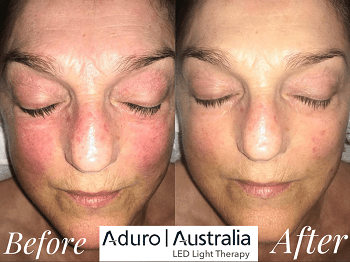
👉 See All the Skin Conditions Red Light Therapy Can Help – Backed by Research
Red Light Therapy for Rosacea FAQ
Is Red Light Therapy Safe for Rosacea?
Yes. Red light therapy is generally considered safe for rosacea when used at the right intensities and without too much heat.
Clinical studies show it can reduce inflammation and redness.
However, always start slowly and consult a dermatologist if you have severe or ocular rosacea.
What Wavelength is Best for Rosacea?
The most studied wavelengths for rosacea are red light around 630-660 nm and near-infrared around 830 nm.
Red light targets skin inflammation and redness, while near-infrared penetrates deeper to boost circulation and tissue repair without causing UV damage.
How Long Until I See Results?
Some people notice reduced redness or irritation in about 1–2 weeks.
Most visible improvements can be seen after 3-4 weeks of consistent use, with 3–5 sessions per week.
Results depend on your rosacea severity, skin sensitivity, and device strength.
Can Near Infrared Light Therapy Make Rosacea Worse?
Near-infrared itself does not typically worsen rosacea.
In fact, according to the American Academy of Dermatology Association, red light therapy can be used to reduce visible blood vessels and thickening skin caused by rosacea.
However, too much heat from high-powered devices can trigger flushing.
Choose devices with moderate irradiance and minimal thermal output, and stop if you notice increased warmth or persistent redness.
Can I Use It with Metronidazole?
Yes, in most cases. Red light therapy can be used with topical metronidazole, but use light therapy on clean skin first.
Use medications afterward unless your dermatologist tells you otherwise, especially if your skin is very reactive.
What’s The Best Rosacea Cream to Use with Red Light Therapy?
After finishing your home red light rosacea treatment, I recommend using this cream to help speed up your results.
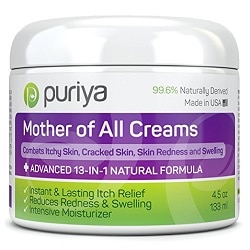
The Puriya all-natural cream for rosacea, psoriasis, eczema, and rashes (with the powerful Amaranth oil) can provide instant relief from itching and pain and is perfect for after red light treatment.
Conclusion
Even though Rosacea is claimed to be an incurable disease, I certainly hope that you don’t give up the battle.
Red light therapy home treatments are proven safe and effective, though the effect is different for each person.
The only way to know is to try.
I’ve shown you exactly how to use LLLT as a natural treatment for Rosacea, including the best home devices for it.
I sincerely hope that this information helps you and other people.
See more about the proven skin benefits of red light therapy.
If you have any questions or comments, please share them with us in the comments below.
To your health and happiness,
Meital
Studies
Bjordal, Jan et al. (2010). The anti-inflammatory mechanism of low level laser therapy and its relevance for clinical use in physiotherapy. Physical Therapy Reviews. 15. 286-293. 10.1179/1743288X10Y.0000000001.
Avci P, Gupta A, Sadasivam M, et al. Low-level laser (light) therapy (LLLT) in skin: stimulating, healing, restoring. Semin Cutan Med Surg. 2013;32(1):41–52.
Ablon G. Phototherapy with Light Emitting Diodes: Treating a Broad Range of Medical and Aesthetic Conditions in Dermatology. J Clin Aesthet Dermatol. 2018;11(2):21–27.
Diogo MLG, Campos TM, Fonseca ESR, Pavani C, Horliana ACRT, Fernandes KPS, Bussadori SK, Fantin FGMM, Leite DPV, Yamamoto ÂTA, Navarro RS, Motta LJ. Effect of Blue Light on Acne Vulgaris: A Systematic Review. Sensors (Basel). 2021 Oct 19;21(20):6943. doi: 10.3390/s21206943. PMID: 34696155; PMCID: PMC8537635.
Hi!
For the 38Led lamp, which distance should i focus the light to my skin? and time in minutes?
Thanks
If you use a 38 LED bulbs device, you can place it as close as 12 inches away from you, but you have to use eye protection goggles and avoid looking directly at the light without them. Start gradually with 15 minutes treatments, 3 times a week. If everything feels fine, you can increase it the LED treatment to 4-5 times a week.
Hello,
I am looking into RLT for TWO reasons; Rosacea and Hair thinning.
Do you have one recommended product that would work well for both, please?
Thank you
The only product that can be used for both Rosacea and thinning hair is probably a small red light therapy panel. You can use it for your face and over (above) your scalp – according to the instructions inside.
Hello.
I have few spider veins(telangiectasia) on my nose and my face.
Do you think that Red-light therapy could help me?
A thousands thanks!
Yes, red light therapy can be helpful for spider veins near the nose. Use it at least 3-4 minutes on each area – 5 times per week.
Thank you for the quick response. Since it is a bed that you lay in and the top closes ..it might not be possible to be 15 inches away. Would one solution be to shorten the time..maybe to 10 minutes ? If the treatments helps my eczema, I am considering purchasing an in home smaller apparatus for my face. Do you think the home units will be as effective with the smaller bulbs listed at 660nm? What should I look for in the home unit’s?
Yes, if the skin reacts badly to the LED treatment, shortening the treatment time may be a good idea. As for home units, I would recommend the tabletop panels that include both red and infrared light. Our top recommendation this year is Revive Light Therapy panels.
I just started using red light therapy for my facial eczema. I have only used it 4-5 times at 15 minutes session using
633 bulbs 100 watt tanning bed style at a salon. Several hours after the session I notice a general flushing of my chest face and upper arms. .. almost like a very light sun burn …this improves by the next day.. is this a normal reaction or is my session perhaps too long? I am hoping to improve the eczema not worsen it.
Temporary redness is known to sometimes happen after LED treatments, and it happens because of increased blood flow, just like many people turn red in the face after exercising in the heat. However, you should make sure to not be too close to the bulb – at least 12 inches away if you use 100W bulbs. Do not use again until redness fades away. I’m sure it will help with eczema.
Nice article! My friend is dealing with rosacea and this device can be effective treatment. I will definitely share this article with her. Thanks a lot for sharing.
In this article you say: “Note that it is not recommended to apply heat on the head area for more than 10 minutes.”.
Yes in this article https://www.infrared-light-therapy.com/led-light-therapy-face-masks/
You say you can use it up to 20 minutes a day.
Which one is it?
Beth,
Red LED light is does not get very heated. It’s a different wavelength than the infrared – which is invisible light experienced as heat. Also, by head area I do not mean the face, I mean the scalp area.
Red light therapy is extremely useful for rosacea treatment.