
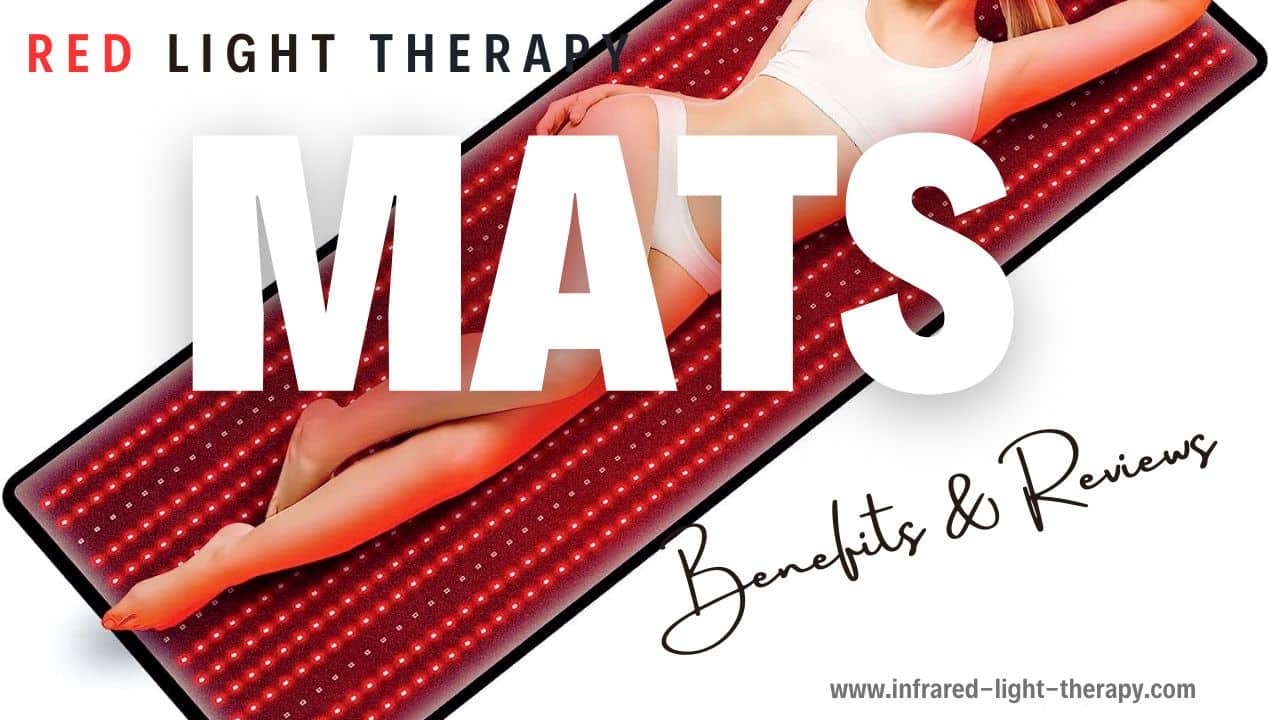
A Red light therapy mat is one of the most convenient (and portable) devices to reap the incredible and proven benefits of red LED light therapy.
All you have to do is lie down, turn it on, set the timer for 10-50 minutes, and absorb the healing red & near infrared rays into your body, resulting in pain relief, skin rejuvenation, wound healing, injury recovery, improved circulation, and even weight loss and hair loss.
Note: Red light therapy is not a one-session miracle.
Most studies use consistent treatments over several weeks before measuring results.
Key Takeaways
In recent years, the popularity of red light therapy for full-body treatments at home has skyrocketed.
People are looking for effective and noninvasive solutions to treat various health concerns and promote overall well-being.
Choosing the right mat depends on what matters most to you – budget, power, portability, or advanced features.
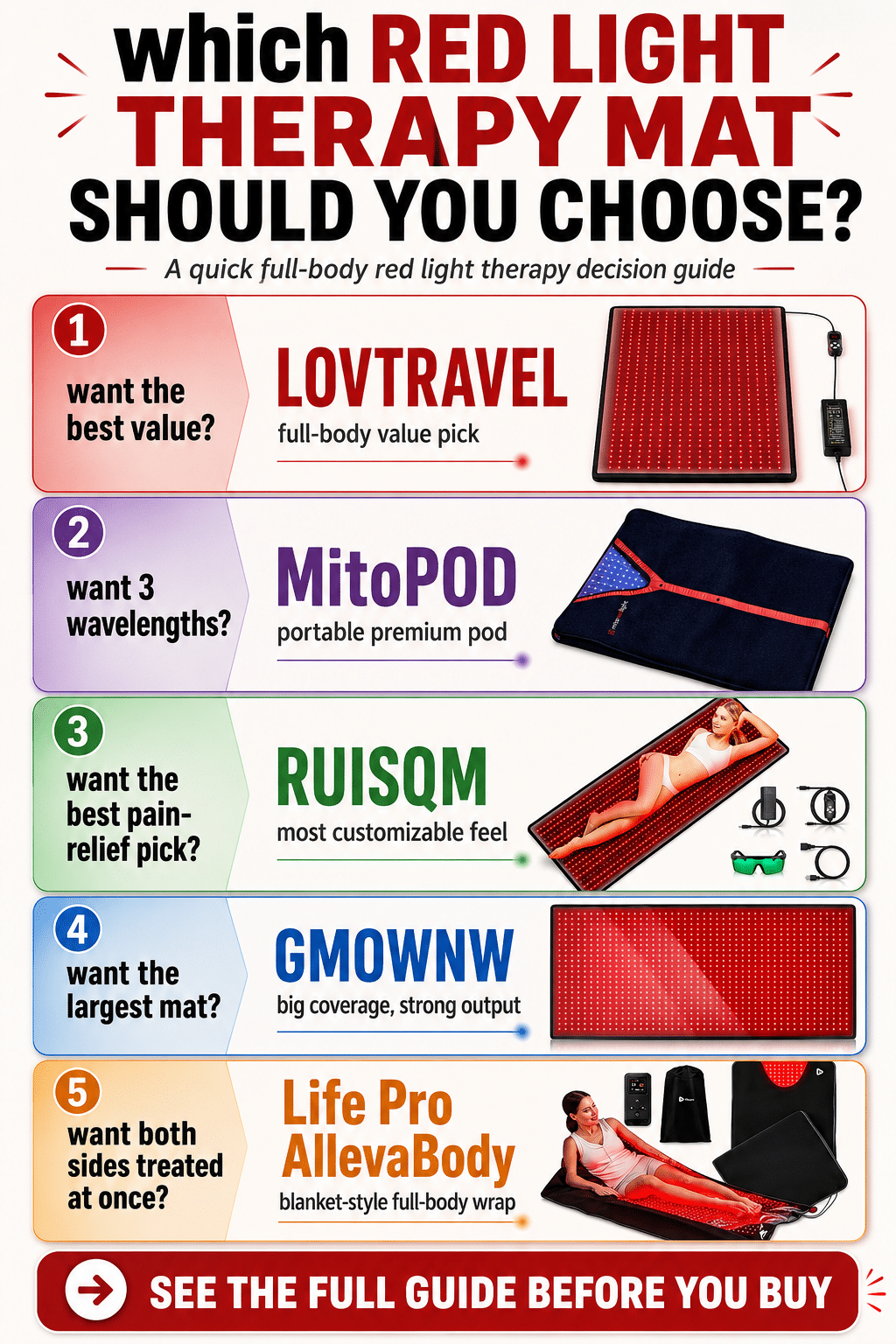
- Best Value – LOVTRAVEL: A wide, full-body mat with 1,280 triple-chip LEDs and adjustable brightness. Great coverage for the price, but less convenient to travel with.
- Best Premium Pod – MitoPOD: Wraps around your body with 2,320 triple-chip LEDs and three wavelengths. More convenient for treating both sides, but expensive.
- Best for Adjustable Pulsing – RUISQM: Five power levels with pulsing options and a shorter timer. Good if you want more control over your sessions.
- Best Large Mat Alternative – GMOWNW: Wide coverage, adjustable brightness, and 10/40 Hz pulsing. Check the exact model before buying.
- Best Full-Body Blanket – LifePro AllevaBody: Treats both sides in one session, with adjustable brightness and pulsing. Expensive, but the manufacturer offers a lifetime warranty.
My advice: Choose a flat mat if you mainly want to treat your back or legs. Choose an enclosed blanket or pod if you want light on both sides without turning over.
While a red light therapy full-body mat is not the only way to shine low-level light therapy on your entire body, it’s certainly gaining popularity in recent years, competing with smaller LED wraps or other home red light therapy devices.
I’ve researched and found the 5 best red light therapy full-body mats, but I’ll also show you alternative devices for full-body LED light therapy at home and how they compare with the mats.
👉 In a Hurry?
See my top 3 picks compared below, followed by my red light therapy mats reviews:
This post may contain affiliate links at no extra cost to you.
How Do You Choose a Red Light Therapy Mat?
Here’s what I’d check before spending hundreds of dollars:
- Coverage: A large flat mat is great for your back or legs. A pod or blanket covers both sides of your body.
- Wavelengths: Most use 660 nm red light and 850 nm near-infrared light. Some premium models include additional wavelengths.
- Irradiance: Look for measurements in mW/cm², including the testing distance. Higher isn’t always better.
- LEDs: Check whether the brand counts individual LED beads or the separate chips inside them.
- Controls: Adjustable brightness, timers, and light modes make sessions easier to customize.
- Warranty and returns: Especially important for large, flexible devices that are folded or rolled up for storage.
Is More Power Better?
Not necessarily.
The light dose depends on both irradiance and treatment time. A scientific review explains why increasing the dose doesn’t always improve the results.
I wouldn’t pay extra just because a manufacturer advertises the highest wattage or LED count.
Is Pulsing Better Than Continuous Light?
Some mats offer pulsing modes, usually at 10 Hz or 40 Hz.
These give you more options, but there isn’t enough direct human evidence to say that pulsing is better than continuous light for most conditions.
I’d treat it as a bonus feature, not a reason to choose one mat over another.
Does Wattage Matter for Red Light Therapy Mats?
Wattage doesn’t really matter. Power output (mW/cm²) is what counts, just like water pressure matters more than a sprayer’s wattage.
More LEDs and higher irradiance mean better results in less time.
Red Light Therapy Mat Wavelengths
Most red light therapy mats combine red and near-infrared light for a full range of benefits – targeting both surface-level skin and deeper tissues at the same time.
Red Light Therapy (630-660nm) – Penetrates the skin to boost collagen, speed up wound healing, and reduce inflammation. I love it for anti-aging and use LED face masks regularly.
Near-Infrared Therapy (800-850nm) – Reaches deeper into muscles and joints, helping with pain relief, circulation, and recovery. It reaches deeper tissues. You may feel mild warmth depending on intensity, but not all mats produce noticeable heat.
👉Far Infrared goes even deeper (up to 5 cm) and is used in infrared saunas and heating pads – but you won’t find it in RLT mats.
If you’re looking for heat-based far-infrared therapy instead, see my full review of the best infrared heat lamps.
The 5 Best Red Light Therapy Mats
Considering my strict requirements listed above, here are the top 5 mats on the market right now, followed by my red light therapy mats reviews:
1. LOVTRAVEL Red Light Therapy Mat – Best Value
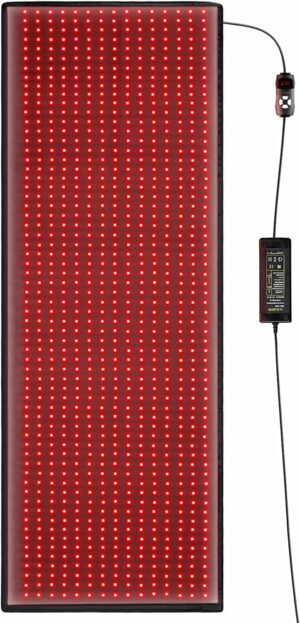
Best value with full-body coverage and 2 pulsing modes, but setup is bulky and less travel-friendly
VIEW ON AMAZON $280
- Size – 70.9″×31.5
- Weight – 7.5 pounds
- Wavelengths – 660 nm / 850 nm
- LEDs – 1,280 triple-chip units (3,840 individual chips)
- Power levels – 5
- Timer: 10–90 minutes
✅ Pros – Large coverage, adjustable brightness, wipe-clean surface, long timer.
❌ Cons – Bulky, no independent irradiance report found, direct-store version currently sold out.
Best for: Someone who wants a large, flat red light therapy mat at a relatively affordable price.
The LOVTRAVEL Mat is a full-body red light therapy that covers your entire body and has 1280 LEDs at 660nm (red) and 850nm (near-infrared) – each containing 3 chips.
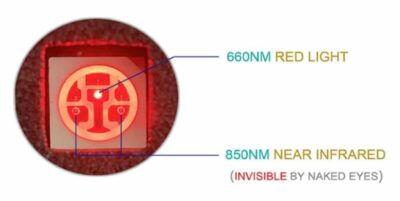
This means a total of 2835 LEDs embedded inside the giant 71″×32″ mat, which produce 105mw/cm2 at the highest power level.
The controller also has a timer ranging from 10 to 90 minutes, but this one goes up in 10-minute increments.
The transparent protective layer is waterproof and oil-proof, so it’s easy to wipe clean.
The LOVTRAVEL one also offers 5 power levels, but here you have 2 pulsing modes (10 Hz/40 Hz) that you can experiment with and find which one is better for your needs.
Why Do You Need Pulsing Light?
The pulsing action of the light is thought to stimulate the mitochondria in cells, which can lead to increased ATP production and improved cellular function.
Also, pulsing red light therapy may be more effective in treating certain conditions, such as chronic pain, because it can help to desensitize pain receptors.

Users are very satisfied with the LOVTRAVEL, with all of them reporting amazing results, such as chronic low back pain reduced by 90%, improved skin complexion, reduced pigmentation, and pain relief all over the body.
Available on Amazon ($280) + 1-year warranty.
2. MitoPOD™ Full Body Red Light Therapy Pod – With 3 Wavelengths
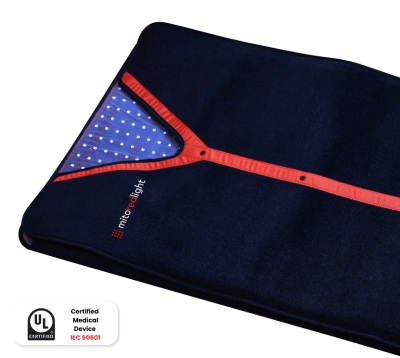
Full-body red light therapy pod with 660 nm, 810 nm, and 830 nm wavelengths
HSA/FSA eligible
- Size – 62” x 54”
- Weight – 15 pounds
- Wavelengths – 660 nm / 810 nm / 830 nm
- LEDs – 2,320 triple-chip diodes (6,960 chips total)
- Irradiance – 30 mW/cm² at the surface, directly over the LED
- Timer: 1–20 minutes
- Certifications – IEC 60601 certified / FDA Class II
✅ Pros – Three wavelengths, full-body wrap design, adjustable brightness, travel bag, HSA/FSA eligible.
❌ Cons – Expensive, one-year warranty
Best for: Someone who wants a premium, space-saving red light therapy pod instead of a wall-mounted panel setup.
The MitoPOD™ is not a regular red light therapy mat.
It is a flexible full-body red light therapy pod designed for people who want large-area coverage without installing a full-size panel setup at home.
Its best feature is Mito Red Light’s TriChip™ technology:
Each diode includes 3 wavelengths: 660 nm red light, plus 810 nm and 830 nm near-infrared light.
That gives you 33% red light and 67% near-infrared light, which makes this pod especially interesting for people focused on deeper tissue exposure, muscle recovery, stiffness, and full-body relaxation.
With 2,320 LED diodes and a total of 6,960 LED chips, the MitoPOD gives much more light coverage than most flexible red light mats.
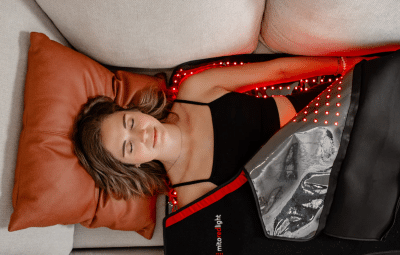
It also has adjustable brightness from 1% to 100%, plus a 1–20 minute timer, so you can control session intensity instead of being stuck with only one power level.
The big advantage is convenience. You can lie inside it, use it at home, fold it away, and even travel with it using the included travel bag.
It gives you the “full-body red light session” feeling without needing wall-mounted panels, stands, or a dedicated therapy room.
However, there is one thing:
Mito Red Light itself notes that flexible devices are not as durable as rigid panels, which is why this pod has a 1-year warranty while many of their panels have longer warranties.
Available at Mito Red Light ($1699 & a 60-day trial)
3. RUISQM Red Light Therapy Mat – Best for Pain Relief

Most customizable with pulsing at every power level, but it’s the heaviest and has the shortest timer
VIEW ON AMAZON $400
- Size – 63″ x 22″
- Weight – 8 pounds
- Wavelengths – 660 nm & 850 nm
- LEDs – 945 (1 red chip + 2 near-infrared chips in each one)
- Power Levels – 5 (all with optional pulsing mode)
The RUISQM is a smaller alternative to the LOVETRAVEL with a shorter timer and adjustable light settings.
Its main appeal is having more control over your sessions.
All 5 power levels can be used in a pulsing mode.
To activate pulsing, you simply turn the mat on through the ON/OFF button and press it again to activate it. Then you can choose one out of 5 power levels.
The fact that you can use a pulsing mode in all power levels makes this mat the most versatile red light therapy mat on this list, and especially customizable.

Available on Amazon ($400). 1-year warranty.
4. GMOWNW Red Light Therapy Mat – Largest & Highest Strength

Largest, most powerful mat with zero EMF and multiple modes, but must be stored carefully to avoid damage
VIEW ON AMAZON $399
- Size – 71″ x 31″
- Weight – 5 Pounds
- LEDs – 1,280 LED beads
- Irradiance – up to 105MW/cm²
- Treatment modes – 5
- Timer: 10–90 minutes
✅ Pros – Wide coverage, adjustable brightness, pulsing options, long timer.
❌ Cons – Unverified irradiance, large storage footprint, can’t be folded sharply.
Best for: Someone who wants a full-body mat with adjustable settings at a midrange price.
The GMOWNW red light therapy mat is the longest and widest RLT mat on this list, with a total length of 71 inches and no less than 1280 red & infrared LEDs inside (1 red chip at 660 nm and 2 near-infrared at 850 nm chips in each one).
The GMOWNW is another good option if you want a large, flat mat that you can lie on while watching TV or relaxing.
It’s very similar in size to the LOVTRAVEL, with five brightness levels and two pulsing options.
I like that you can adjust the treatment settings without having to buy a more expensive pod.

The timer (in 10-minute increments) can be set to up to 90 minutes of treatment, but I don’t recommend using the mat for this long. A 30-minute session on this powerful mat is enough.
This red light therapy mat is lightweight and very easy to move around and take with you, yet it’s still large enough to cover most body parts.
You can not fold it rigidly to prevent damage to the LEDs; you can roll it up loosely, and you need to use it on a flat surface (not a bed or a sofa) to prevent shortening the lifespan after long-term use.
Available on Amazon ($399)
5. Life Pro AllevaBody – Best Red Light Therapy Blanket

Full-body double mat with high LED density, pulsing, and zero EMF, but it’s the most expensive option
VIEW ON AMAZON $1400
- Size – 74.8″ × 24″ × 1″
- Weight – 10.2 lbs.
- LEDs – 2,320 triple-chip LED sets
- Wavelengths – 660 nm / 850 nm
- Irradiance – 110 mW/cm2
- Modes – 3 (red/infrared/combo with pulsing)
- Power levels – 5 (0.9W – 16W – 32 F to 104 F)
- Timer: 1–30 minutes
✅ Pros – Full-body coverage, adjustable settings, independent controls, lifetime warranty.
❌ Cons – Expensive, takes more space than a small mat or wrap.
Best for: Someone who wants full-body red light therapy while lying down, without changing positions.
The Lifepro Red Light Therapy Body Blanket is the best alternative to a full-size spa-like red light therapy bed.
You can use the 2 mats to cover both sides of your body completely in one session!
It is comfortable, durable, and easy to fall asleep on (and wake up pain-free).
It has 5 power levels and 3 modes, including pulsing and dual wavelengths (660nm for skin health and 850nm for deep tissue repair) that let you tailor your therapy session to exactly what your body needs.
The controller has a convenient timer and allows you to set the mode, power level, and running time.
This means that you can safely fall asleep on it, feeling cozy and warm, and the timer will automatically shut it off.

The recommended treatment time is 30-50 minutes per day for best results.
Available on Amazon ($1400)
Lower Cost Alternative – FUIART Red Light Therapy Blanket
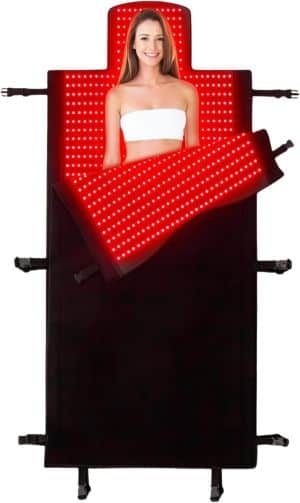
Intense full-body therapy with 2,570 LEDs and triple modes – though it’s bulky to move or store
VIEW ON AMAZON $600
- Size – 75″ × 35″
- Weight – 16 lbs.
- LEDs – 2570 (3-in-1 LEDs)
- Wavelength – 660 nm red and 850 nm
- Modes – 3 modes, 5 intensities (2 pulse modes)
- Irradiance – 192 mW/cm²
- Warranty – 1 year
For literally half the price, you can get this new and trending red light therapy blanket, which looks like a sleeping bag (made from allergen-free TPU leather) and even has a dedicated head/face area that the Life Pro doesn’t have.
It has about 200 more LEDs than the Life Pro, and it is a bit bigger and has a long timer.
How Long Does It Take to Feel the Results?
The time it takes to see results from red light therapy mats can vary depending on the individual and the condition being treated.
A general recommendation is to try this relaxing therapy consistently for about seven to 12 weeks.
This specific duration was used in most clinical studies – before they checked for the results (compared with a placebo).
However, some people may need more or less depending on their response to the therapy.
Manage your expectations and understand that red light therapy is a process that takes patience and dedication.
While there might already be a lot of action behind the scenes at the cellular level, it can take a while to heal and regenerate damaged tissue.
For example, clinical studies of wound healing with red light therapy found that the mean time of wound recovery for deep-thickness wounds was around 19.86 to 21.02 days.
Is More Power Always Better?
Higher irradiance can shorten your session time, but the right dosing matters more than raw power.
Can I Overdo Red Light Therapy?
Yes. More is not always better. Follow the recommended session times.
Is it Safe Daily?
Most studies use 3-5 sessions per week. Daily use at moderate doses is generally considered safe.
Red vs. Infrared Light Therapy Mats
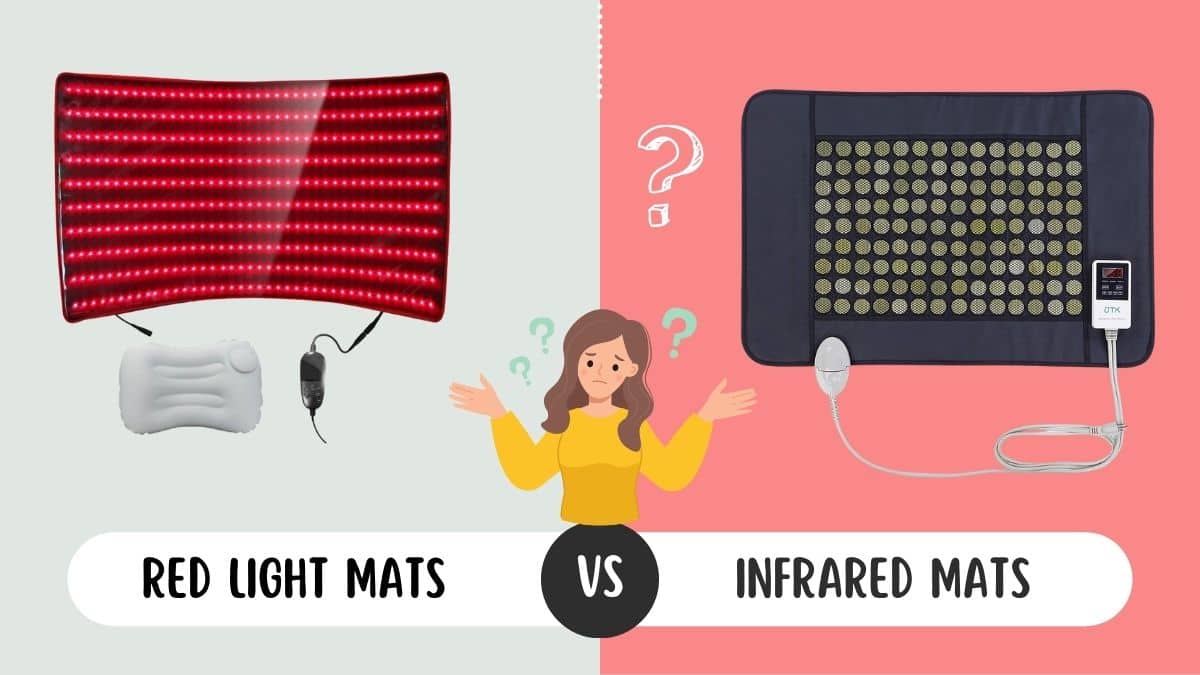
These two types of mats are easy to confuse, but they work differently.
- Red light therapy mats use red and near-infrared LEDs, usually around 660 and 850 nm.
- They deliver light to your skin and underlying tissues, with little heat compared with a traditional heating pad.
- Far-infrared heating mats use heat to warm your body. They’re better for people looking for soothing warmth, muscle relaxation, and temporary relief from stiffness.
So which one should you choose?
- For warmth and stiff muscles: Start with a far-infrared heating pad.
- For red/NIR photobiomodulation: Choose a red light therapy mat or a red light therapy wrap.
- For both: Look for a device that specifically includes red/NIR LEDs and a separate heating function.
Don’t assume a gemstone heating mat provides the same treatment as a red/NIR LED mat.
Red Light Therapy Mat vs. Panel

Red light therapy mats and blankets are great if you want to lie down and relax during your sessions.
Flat mats usually treat one side of your body at a time, while enclosed blankets can cover your front and back together.
They’re also easy to store, although you need to be careful when folding or rolling them to avoid damaging the LEDs.
Red light therapy panels are better if you want more flexibility.
You can use them while sitting or standing, adjust your distance from the light, and target different areas, from your face to your legs.
Their rigid design is generally more durable, but they take up more space. See my red light therapy panels comparison to find out which one suits you best.
What Are the Benefits of Red Light Therapy Devices?
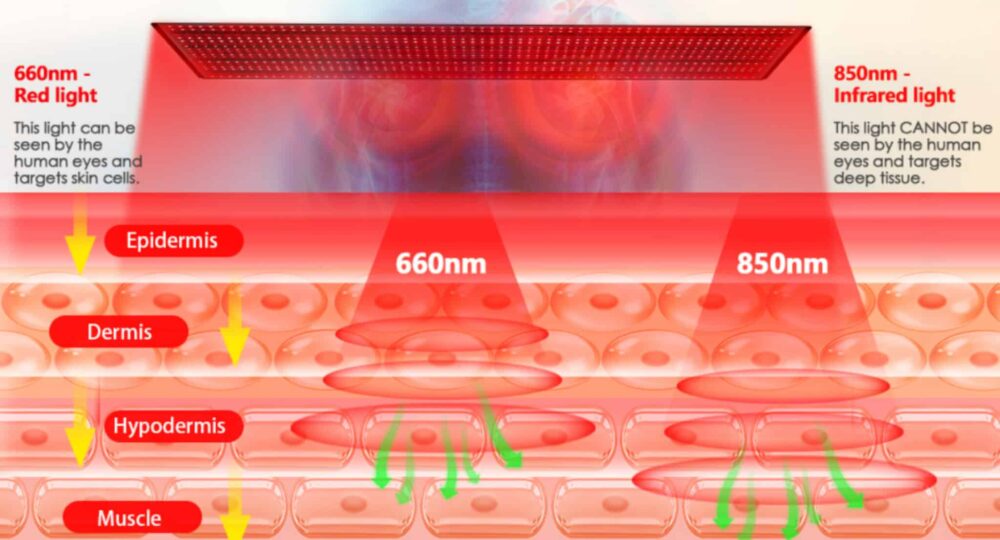
Red light therapy works by emitting red, low-light wavelengths through the skin, which helps the process of tissue recovery and rejuvenation. It is thought to work by acting on the “power plant” in your body’s cells called mitochondria.
With more energy, other cells can do their work more efficiently, such as repairing skin, boosting new cell growth, and enhancing skin rejuvenation.
Here’s the full list of science-backed benefits (list of studies at the bottom of the post):
- Reduced inflammation (study)
- Relief from muscle and joint pain (study)
- Stimulation of collagen and elastin production in the skin (see all proven RLT skin benefits)
- Improved circulation
- Enhanced skin hydration and texture
- Improved hair growth (see my guide to the best red light therapy caps for hair growth)
- Promotes wound healing and tissue repair
- Reduces acne and scars (study)
- Reduces wrinkles, fine lines, and age spots
- Supports a temporary inch reduction when combined with lifestyle changes
- fibromyalgia relief
- Chronic condition relief
RLT mats can be used in some surprising ways beyond their usual benefits for humans.
For example, they can help with hair growth (when you expose your scalp to the light).
Pets can also benefit from red light therapy mats (Consult a veterinarian; avoid direct eye exposure).
Imagine your pet has a wound that won’t heal easily. The red light helps speed up the healing process.
People have also found that red light therapy can make their pets’ joints feel better.
If you have acne, the red light can calm the redness and make your skin look clearer. It can even reduce scar appearance.
The possibilities are truly exciting.
Full Body Red Light Therapy Side Effects
Red light therapy is generally safe, but use common sense: don’t look directly into the LEDs, check with your doctor if you’re pregnant, avoid treating over known cancers, and if you have a pacemaker, stick to light-only devices (skip PEMF) unless your clinician says it’s okay.
Studies have found that low-level photobiomodulation is safe even for actinic keratosis, non-melanoma skin cancers, acne, and fatigue in cancer patients.
However, there are some possible side effects to be aware of. These are usually minor and do not last long.
Some of the possible short-term side effects of red light therapy include headaches, eyestrain, and irritability.
There have also been reports of burns and blistering from using RLT units, but these are rare.
Using infrared light for red light therapy may be more likely to cause side effects because, unlike LED light, infrared is also thermal energy.
To make sure you stay safe and get the most benefit from red light therapy, it’s important to follow the instructions given by the manufacturer.
Full Body Red Light Therapy Before and After
Full body red light therapy has shown positive results in several clinical studies, especially for skin quality and certain pain conditions.
Results vary depending on dosage and consistency.
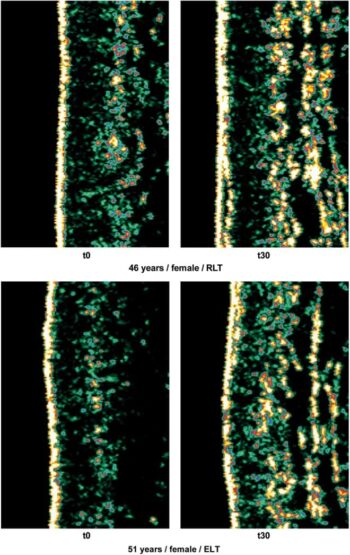
For example, a controlled trial to determine the efficacy of red and near-infrared light in patient satisfaction, reduction of fine lines, wrinkles, skin roughness, and collagen Density included 2 groups of patients who received whole-body red light therapy and experienced significantly improved skin complexion and skin feeling, reduced skin roughness, and increased collagen density.
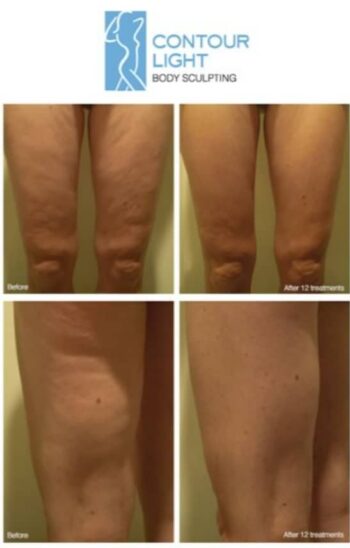
When it comes to fat loss, the Kryo Vitality clinic in Iowa, which treats patients by wrapping them in red light therapy pads, shows these amazing results:
Final Thoughts
For a large flat mat at a reasonable price, I’d start with the LOVTRAVEL.
If you want full-body coverage without turning over, the MitoPOD and LifePro AllevaBody are more convenient, although you’ll pay considerably more.
And if you’re mainly treating a small area, like your back or knee, you might not need a full-body mat at all.
Check out my red light therapy wraps and pads before spending more than you need to.
To your health and happiness,
Meital
Studies
Janis T. Eells, Margaret T.T. Wong-Riley, et al. Mitochondrial signal transduction in accelerated wound and retinal healing by near-infrared light therapy, Mitochondrion, Volume 4, Issues 5–6, 2004
Barolet D, Boucher A: Prophylactic low-level light therapy for the treatment of hypertrophic scars and keloids: a case series. Lasers Surg Med. 2010, 42:597-601.
Stelian J, Gil I, et al. Improvement of pain and disability in elderly patients with degenerative osteoarthritis of the knee treated with narrow-band light therapy. J Am Geriatr Soc. 1992; 40: 23-26
Avci P, Gupta A, Sadasivam M, Vecchio D, Pam Z, Pam N, Hamblin MR. Low-level laser (light) therapy (LLLT) in skin: stimulating, healing, restoring. Semin Cutan Med Surg. 2013 Mar;32(1):41-52.
Langella, L.G., Casalechi, H.L., Tomazoni, S.S. et al. Photobiomodulation therapy (PBMT) on acute pain and inflammation in patients who underwent total hip arthroplasty—a randomized, triple-blind, placebo-controlled clinical trial. Lasers Med Sci 33, 1933–1940
Wunsch A, Matuschka K. A controlled trial to determine the efficacy of red and near-infrared light treatment in patient satisfaction, reduction of fine lines, wrinkles, skin roughness, and intradermal collagen density increase. Photomed Laser Surg. 2014 Feb;32(2):93-100.

loved your review but can’t find them on Amazon.
All the direct links to the mats are inside the post :)
I’m looking for a mat that is easy enough to handle for my mom with knee and shoulder problems mostly arthritis. The weight of the full mats would be too heavy for her to maneuver.
If the weight is too height your mom can get a smaller mat and do seprate treatments for the knee and the shoulder. Here’s my post about the best red light therapy pads and belts. A belt that wraps around the knee would be a better choice. I hope this helps :)